

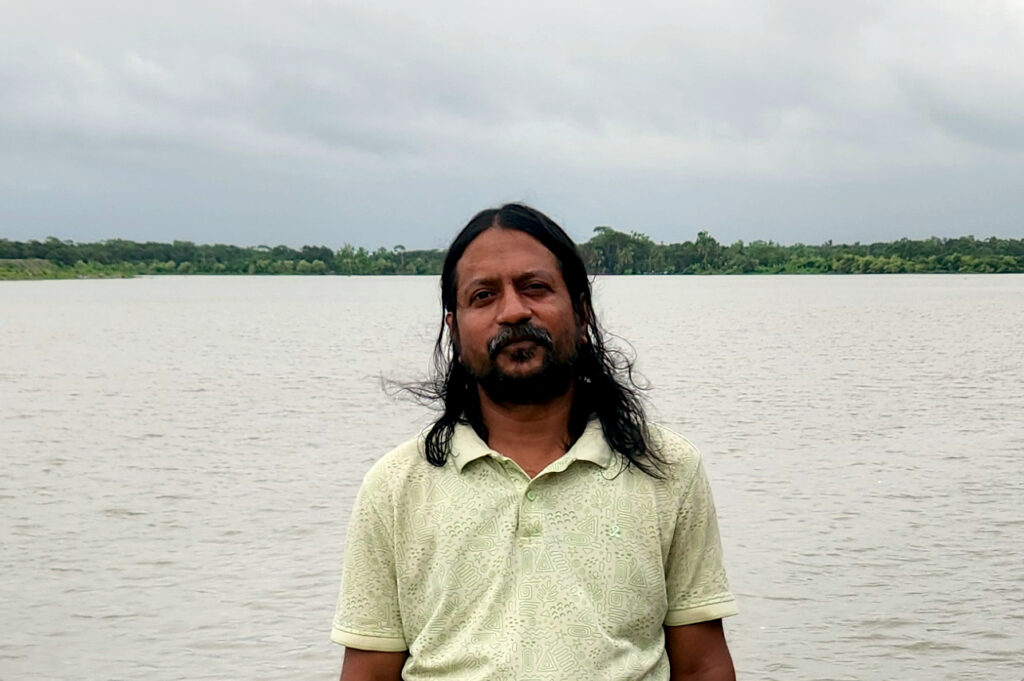
As Bangladesh’s political conversation increasingly shifts online, journalist Polash Datta has been using data journalism to understand how narratives spread, evolve, and influence public opinion. In the wake of the country’s political transition and ahead of national elections, he examined how Facebook became a key battleground for political actors, influencers, and supporters. By analysing engagement data, posting patterns, and online networks, Datta’s reporting uncovered coordinated amplification efforts and revealed how a small number of influential accounts can shape wider political discourse. In this conversation, he discusses the opportunities and challenges of investigating politics through social media data and why data journalism is becoming an essential tool for accountability reporting in Bangladesh.
RFW: What first drew you to investigate political narratives through social media data rather than traditional reporting methods?
Polash: Bangladesh is one of the top 10 countries based on Facebook user count (67.2M in 2025). Although Facebook has been used as the key opinon sharing space by citizens of Bangladesh, the paltform has become sort of key driving force since the July uprising that ousted autocratic Hasina regime.
During the interim government-the post-Hasina regime-people in Bangladesh have become more and more dependent on Facebook in expressing their thoughts, even organising protest events. Soon after the announcement of election schedule by the eleciton commission of Bangladesh Facebook became the battle ground for party activists, supporters and influencers. This lead us to investigate the volume, and patterns of political narratives through social media. Through this method we have been able to cover a large number of people which could not be done in traditional reporting.
In your analysis of Tarique Rahman’s Facebook posts, what made you decide that this pattern of online engagement was worth investigating?
The analysis was rather ablut posts about Tarique Rahman by an infamous influencer who lives in New York.
Following the ouster of Hasina there was basically two political line were available for people to chose in vote: (a) Bangladesh National Party – a moderate pro-democratic party led by Tarique Rahman, and (b) Bangladesh Jamaat-e-Islami – a pro-islamic party whose members collaborated with Pakistani forces during the liberation war of Bangladesh in 1971.
We noticed that the New York based influencer had been mobilizing opinioins in favour of Jamaat and against Tarique Rahman (BNP). We thought analysis of such online propaganda could create awareness among citizens.
What did the data reveal about political influence online that wasn’t obvious from simply observing the posts individually?
What the data showed was that a small number of accounts were responsible for most of the reach and engagement in the network. When we looked at all the posts together, we found repeated narrative patterns, coordinated amplification, and continued focus on Tarique Rahman and BNP over time. These trends could not be seen or understood from looking at individual posts. They only became visible when we analysed the engagement data, posting timelines, network connections, and narrative patterns across the entire dataset.
How did you approach verifying and analyzing the claims around Jamaat’s post-election narrative?
I assume this question is about “Three tactics shaped Jamaat-leaning online narrative” article. We did not intend to verify the posts on field level. Rather we monitored election results as they were being announced by district election officer and broadcast on TV. The posts were coming from a few inlfluencers on Facebook during the election day, even before result was announced. That was a tense time considering such posts could fuel chaos.
Later we collected and analysed Facebook posts, engagement data, and recurring narratives, then compared those claims directly with verified election data.
Rather than focusing on individual posts, we examined patterns across the wider information ecosystem – who was sharing the claims, how widely they spread, and whether they matched the documented results.
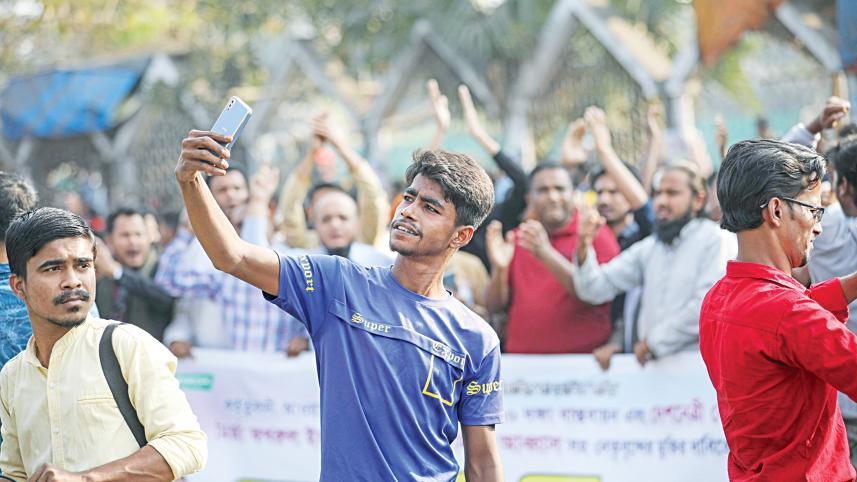
What surprised you most when comparing the viral claims with the actual constituency-level election data?
To be frank, actual constituency-level data did not surprise us in terms of winning candidate. Based on the previous vote patterns and discussion with people we were surprised to see Jammat winning in 68 constituencies.
Why do you think misleading political narratives spread so quickly after elections, even when official data is available?
The narratives begaun to appear on Facebook before the declartion of official results, during counting of votes.
How has social media changed the way political actors in Bangladesh shape public opinion and legitimacy?
Now-a-days social media is palying two major roles in Bangladesh: (a) from time to time comments or speeches of politicians’, which they do not desire to be public, get leaked on Facebook/Youtube; then they are forced to react to the leaked issue, and (b) biased opinions keeps floating on Facebook from all sorts of politicians and supporters.
What are the biggest challenges of using data journalism to report on politically sensitive issues?
The power and influence of politics are among the biggest challenges we face. I can give an example from one of our upcoming data reports. The report focuses on politicians’ declared election expenses. We have developed a database of the probable election expenditures of winning candidates based on the affidavits they submitted to the Election Commission.
During our analysis, we identified several discrepancies in the data. A number of questions have emerged regarding the relationship between the candidates’ declared income and their reported election expenses. However, we are currently exploring methods and approaches that would allow us to report on these findings without unnecessarily antagonizing the candidates involved.
How do you ensure your methodology remains transparent and credible when reporting in polarized environments?
We try to document every step of the process – from how data was collected and cleaned to how it was categorised and analysed. We publish our methodology and acknowledge the limitations of the data, if applicable.
We also separate facts from interpretation. Readers are able to distinguish between what the data directly shows and the conclusions we draw from it. By making our methods visible and our assumptions clear, we allow others to scrutinise, replicate, or challenge our work.
What role do you think data journalism should play in the future of accountability reporting in Bangladesh?
Data journalism could play the major role in accountability reporting at least two reasons: (a) data could cover a topic comprehensively in its entirety, (b) data itself raise questions about actions, claims, or decisions of involved entitites, it does not depend on quotes from officials.
How do these investigations connect to larger questions about misinformation, electoral trust, and democratic participation?
These investigations are connected to misinformation because they show how misleading claims, or unverified stories can shape what people believe. They also relate to trust in elections, because people form opinions not only from official results but also from what they see and share on social media.
More broadly, these investigations are about democracy. People make political decisions based on the information they receive. By using data to check claims and test popular narratives, we try to help people understand the facts and make informed decisions based on evidence rather than rumours or assumptions.
What kinds of political or digital patterns are you hoping to investigate next?
We have three more investiagtions in line under the election theme. One of those investigates politicians’ declared probable expense in election campaign. We will investigate the discrepancies of source of campain funding, if there is any. Another is on the voting pattern across 300 constituencies.