

A narrow escape: Afghan journalist Khadija Haidary detained in Pakistan amid growing risks for exiled reporters
Khadija Haidary is an Afghan journalist and managing editor of Zan Times, an outlet focused on women’s rights and human rights under Taliban rule. After fleeing Afghanistan in 2024 due to threats linked to her reporting, she sought refuge in Pakistan while awaiting resettlement to Canada.
On April 21, 2026, Haidary sent a brief message to colleagues: “The police have come.”
Within hours, Pakistani authorities detained Haidary, her husband, and their young son and transferred them to a pre-deportation facility in Islamabad. The arrest came one day after her third failed attempt to leave Pakistan for Tanzania, where she hoped to stay temporarily while continuing her resettlement process.
Despite holding valid visas, exit permits, and proof of paid overstay fines, Haidary had repeatedly been denied boarding by Pakistani authorities, who cited complications related to her original medical visa. The inconsistent enforcement effectively left her trapped—unable to remain safely in Pakistan, yet prevented from leaving.
Inside detention, Haidary and her family were held for roughly 60 hours under difficult conditions. Women and children were separated from men, and detainees were fingerprinted and photographed as part of deportation procedures. Communication was tightly restricted, but Haidary briefly managed to warn colleagues that deportation to Taliban-controlled Afghanistan could happen within days.
For Haidary, forced return posed a severe threat. As a journalist previously targeted by the Taliban, deportation could have placed her in immediate danger.
Following news of the arrest, international press freedom groups—including the Committee to Protect Journalists, Reporters Without Borders, Free Press Unlimited, and PEN International—mobilized alongside journalists, activists, legal advocates, and UN representatives to pressure authorities for her release.
The coordinated intervention succeeded. Haidary and her family were released and instructed to leave Pakistan immediately. With little time remaining before their exit permits expired, they returned to the airport and were finally allowed to board a flight to Tanzania.
Her case highlights the increasingly precarious situation facing Afghan journalists in exile. Since the Taliban’s return to power, many reporters—particularly women—have fled threats and persecution, only to encounter legal uncertainty, detention risks, and potential deportation in neighboring countries.
Haidary’s release also underscores the importance—and limits—of international solidarity. While coordinated advocacy helped secure her safety, many less-visible Afghan journalists continue to face similar dangers without the same level of support or international attention.
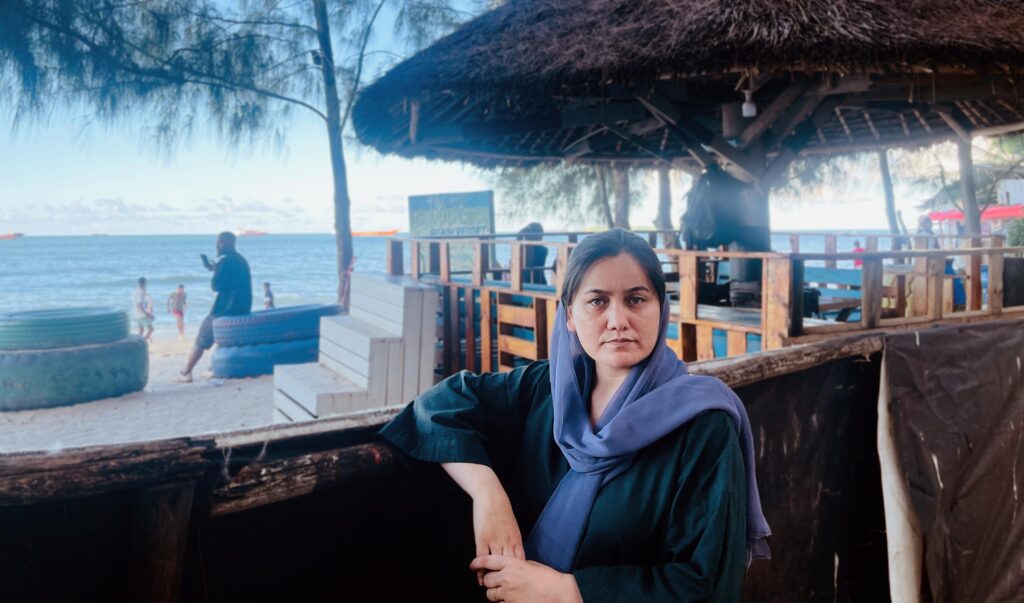
RFW: Can you describe the moment the police arrived—what were you thinking and feeling?
Khadija: When the police arrived, I had just woken up. You must know that on April 20 we were supposed to fly to Tanzania, but the police stopped us. That day at noon we had gone to the hotel. We were exhausted, drowsy, upset the whole day, and I don’t even know what time we finally fell asleep that night. On April 21, at 1 p.m., I woke up. I replied to a few emails and was waiting for my husband to wake up. He and my son woke up together, and the three of us washed up and were just about to order food when there was a knock at the door. My husband opened it, and there stood a young man in plain clothes, but from his shirt we realized he was police. The hotel staff had come with him, and my husband stood at the door facing them, but the policeman leaned his head inside to see how many of us were there. It was such a strange situation. As soon as my husband said it was police, I started gathering our things. I was panicked, quickly packing everything into the bags. Several times I looked down from the balcony and saw their car parked outside. It felt like a nightmare unfolding before me. Since the day I entered Pakistan, I had been afraid of the police. Even when we had visas, I was still scared of encountering them. When I sent my last message to Zahra Nader, I realized my voice was trembling. A sense of insecurity and hopelessness had taken over my whole body, and I was shaking.
What conditions did you and your family face inside the detention facility?
Inside the detention facility, everything began with humiliation. They interrogated me for filming the camp scene. In front of everyone, they seized my phone and searched through it. They deleted the photos and videos, then demanded I open WhatsApp to show whom I had sent them to. My husband intervened, but they told him he was to blame for not controlling his wife. After that, they registered us and took our phones. We were moved to another section of the compound where they carried out biometrics and told us we would be deported. Then my son and I were directed to Room 3 on the first floor, while my husband was sent to the second floor, which was the men’s section.
How did you cope with the uncertainty, especially with your young child with you?
It was extremely difficult, but there was no other choice. A thousand thoughts and worries flooded my mind. My son couldn’t stay still for a moment—running everywhere, wanting to play. The police blamed me for not controlling him, while the women each had their own advice and suggestions on how I should manage him. I was bewildered, torn between fear of deportation, the terror of facing the Taliban, and the situation there with my restless child. I truly didn’t know what to do.
One Afghan woman, who had also been arrested by Pakistani police and brought there two days before us, told me that my son wasn’t normal. She said he had autism and that I didn’t realize it. Hearing that my son supposedly had autism without me knowing made me cry. Of course, my son doesn’t have autism—he’s just playful. But in that place, there was really no way to keep him calm: no toys to play with, no food to eat, and no children his age to play with. Those were truly very hard moments.
At what point did you realize you might be deported back to Afghanistan?
As time passed, the validity of our exit permit kept shrinking. our exit document was set to expire on April 24, and by that date we would no longer be able to make any claim. We were taken on April 21, and by the night of April 23 only two hours remained on our permit when we went to the airport. On April 23, I completely lost hope and told myself that we would surely be deported.
The Pakistani police were arresting between 10 to 20 people every day and bringing them to the camp. The Afghan women there said that once you had been biometrically registered, deportation was inevitable. They advised me not to take my computer back to Afghanistan, and told me not to carry my phone either—better to buy a new one with no documents inside. In my mind, I was already planning what I would do once I entered Afghanistan: what to wear, how to face the Taliban. It was a truly strange and distressing situation.
How does the danger you faced in Pakistan compare to what you fled in Afghanistan?
It was the same in both places. In Afghanistan, I was afraid of anyone who looked like a Talib, and in Pakistan, the moment I saw a car resembling a police vehicle, my hands and feet would start trembling. Many times I said that the Pakistani police and the Taliban are alike. Neither of them showed mercy or compassion toward Afghan women.
What do your repeated denied departures say about how Afghan refugees are being treated?
The Pakistani police enforced rules on Afghans that didn’t exist at all. They wouldn’t let us leave because we had entered Pakistan on a medical visa—even though we had already paid the fines for the days we had overstayed without a visa. Still, they kept saying we weren’t allowed to fly. And it wasn’t just us; many Afghans had the same experience. They harassed Afghans for whatever excuse they wanted.
In Karachi, even hotels refused to accommodate us. At one place, as soon as they saw our Afghan passports, they apologized and told us to vacate the room immediately. I endured very hard days in Pakistan, and even recalling them now causes me pain.
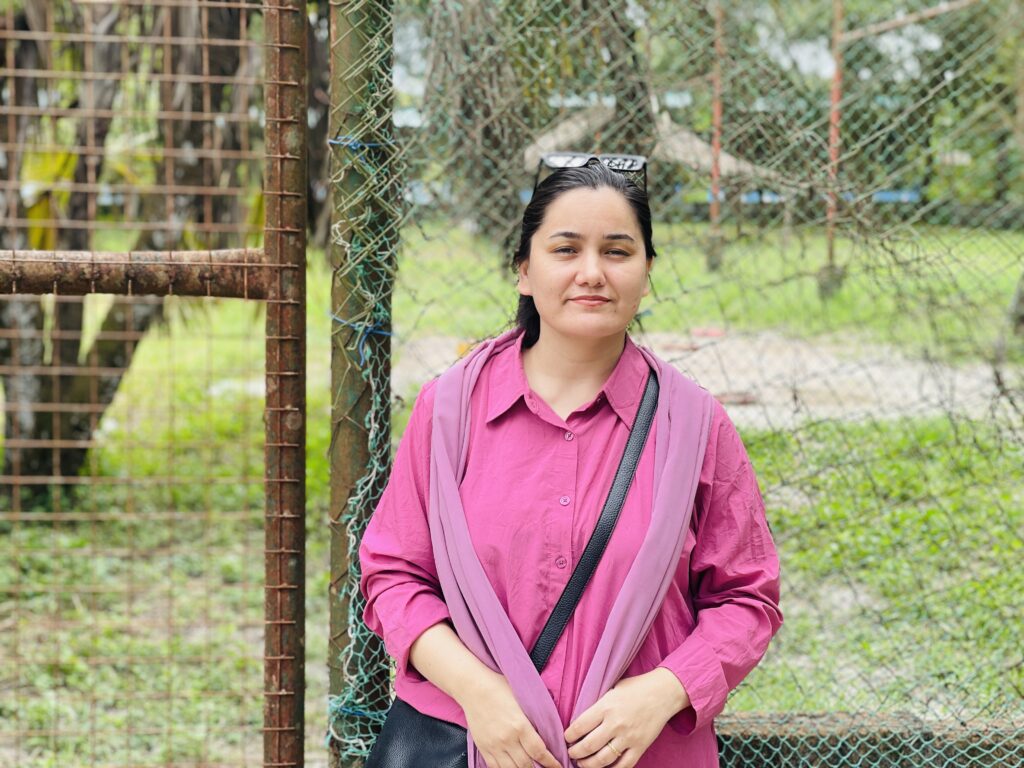
Did authorities clearly explain why you were prevented from leaving despite valid documents?
They gave no explanation at all. Every policeman we encountered came up with something different. One said we had entered on a medical visa. Another claimed our son’s passport didn’t have a Pakistani entry stamp. Yet another insisted that Afghans had created a transit route through Pakistan and that they wouldn’t allow it. Each one said something different, and it was unclear what law they were actually applying to us.
How has this experience affected your commitment to journalism?
During those difficult days, when I was wandering from one hotel to another, I worked without pause. As soon as I connected to the internet, I would start working, paying no attention to where I was or what condition I was in. Writing became my greatest companion and support. I have written many stories from those days. Carrying bags on my shoulders, a small child in my arms, and my computer at my side showed how much Afghan women needed to have their own voice.
I kept telling myself that my sisters needed someone to speak on their behalf, to explain why and with what supposed crime they were forbidden from going to school or working. The hardship of those days made me even more committed, and now that I am in Africa, I remind myself that I came here with one purpose: to ensure that the voice of Afghan women is never silenced.
Do you think journalists in exile are receiving enough protection internationally?
I don’t think so, because there are many Afghan journalists in Pakistan who don’t even have a monthly salary. But when I was taken to the camp and saw how some organizations and journalists tried to rescue us, I realized the power of the media. I told myself that if journalists commit to working together, they can accomplish a great deal.
What did it mean to you to see such a rapid international response to your case?
Yes, this was a very different experience. Everyone wanted to do something to help. When my phone was handed back to me and I got into the car, I connected to the internet and found thousands of messages on my WhatsApp. Everyone had tried to do something for me. Zahra Nader had reached out to everyone she could. Many organizations in the U.S., Canada, Europe, Asia, Pakistan, and even my own friends inside Pakistan had tried to rescue me. Friends from China, several Chinese journalists, and my publisher who had released my book in China had all made efforts.
It was truly strange and unbelievable. I came to realize how powerful solidarity can be—that media, when united, can act as a lifeline and work more effectively. Journalists, especially women journalists, understand more deeply the kinds of harm that women face in a country like Afghanistan, and they had spared no effort in trying to help.
Why do you think advocacy and visibility made a difference in your situation?
I realized there that working and writing from inside a cramped, dark apartment in Karachi, Pakistan had not been in vain. I told myself it was all the power of the pen and of writing that had saved me. Of course, I don’t mean that I am someone special, but what I came to understand was that my work had not been meaningless. In Afghanistan, people don’t generally have a positive view of writing, and I too sometimes fall into the thought that writing is pointless. But in that moment I told myself that writing is truly powerful.
Now that you are in Tanzania, what are your immediate priorities—and what gives you hope moving forward?
Life here is wonderful. We started living in a home that is filled with light more than anything else. Everything is clean. Several times a day I can smell the scent of rain, soil, and grass. I’ve often said this is the reward for enduring that dreadful apartment in Pakistan. Here I tell myself that I came so the voice of Afghan women would not be silenced.
Alongside my administrative work with Zantimes, I’ve decided to write more articles and narratives here. Focused on the situation of Afghan women, I want to continue writing without pause. There isn’t much else I can do, but writing is the only valuable thing that brought me all the way to Africa, and it’s the work I must carry on.