

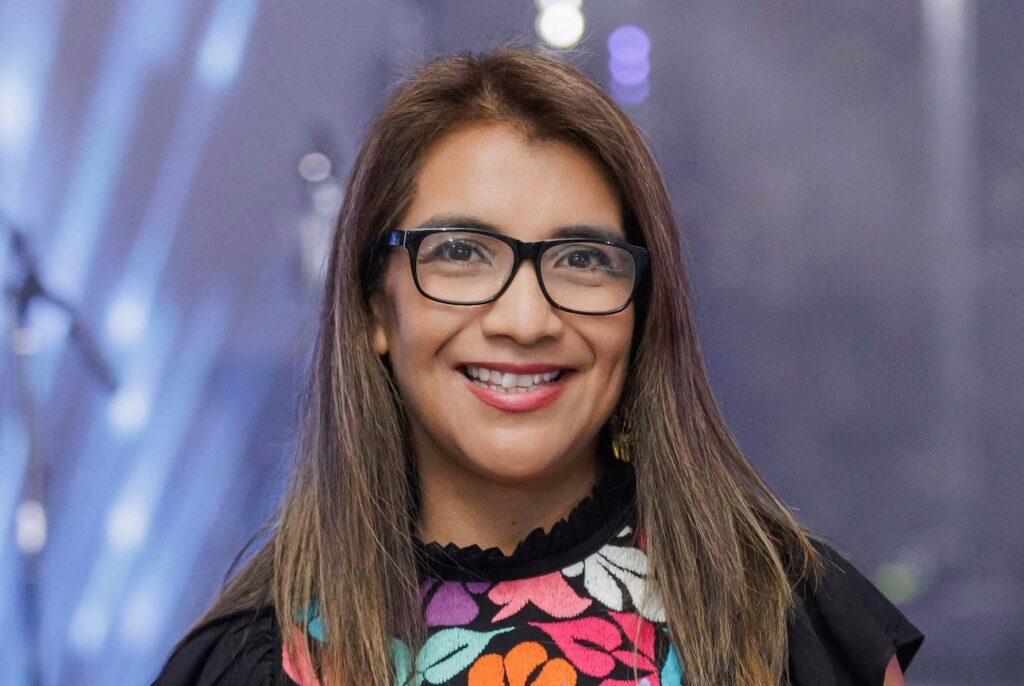
Welcome to this conversation with Kennia Velázquez on Report For Impact. Kennia is a Mexican journalist who studied history and has specialized in issues related to corruption, human rights, and health. She currently contributes to Quinto Elemento Lab and is affiliated with the Laboratory of Journalism and Public Opinion in México.
We’ve invited her to discuss “Mexico: The Battleground of the Ultra-Processed Food Industry”—a journalistic investigation conducted through a cross-border collaboration with Lighthouse Reports and media outlets from several countries, with the support of Report for Impact.
Miguel Garcia RFI: Kennia, welcome and thank you for accepting our invitation.
Kennia Velázquez: “Hello, thank you so much for the invitation.”
Miguel Garcia RFI: How has Mexico become a battleground in this debate over ultra-processed foods?
Kennia Velázquez: “Well, look, Mexico ranks fourth in per capita consumption of ultra-processed foods.
We’re a country that, well, consumes a lot of ‘refresco’—as we call it here—sugary drinks. And well, that has caused a very serious public health problem even before the pandemic It was clear that it was unsustainable for the country and for public finances to have the healthcare system treat the population suffering from diabetes, hypertension, and other conditions
Governments have been forced to take measures to discourage the consumption of these products And well, some of these have included a tax on sugary drinks, front-of-package warning labels on products, advertising regulations, and a ban on the sale of these products in schools.
So, well, that’s caused the industry to react in such an overwhelming way to try to undermine or halt these measures.”
Miguel RFI: Who’s winning the battle?
KV: “Well, fortunately, public health!
Because what we discovered in this investigation is that in only two cases have judges ruled in favor of the industry—and even then, somewhat partially and based on rather technical points—but the majority, the vast majority, including the Supreme Court of Justice, has ruled in favor of these measures So, well, that’s very good news.”
RFI: But in any case, companies aren’t backing down that easily. Let’s talk about strategic litigation, lobbying, and the influence of companies in this sector, as well as the state’s responsibility. Are civil society organizations on equal footing to resist and put up a fight?
KV: “No, but they’ve fought very bravely, I think—they’ve put up a fight—and, well, yes, it’s not easy. I mean, Mexico’s president just met with—right? With the president of Coca-Cola Mexico—and she hasn’t met with civil society organizations. I mean, I don’t know if they’ve reached out to her, but it’s harder, isn’t it? To actually gain access to that. And well, if they’ve been lobbying, they’re taking different routes
Through the legislative route—but right now, where we’re seeing it most intensely is through the administrative route. Here in Mexico, for example, labeling regulations are currently under review. It was scheduled to enter a much stricter third phase this year, but it was delayed until 2028, and right now, well, the criteria are being reviewed. And what civil society organizations are saying is that, well, the industry’s influence is overwhelming, too.
There are some officials reviewing these regulations who used to work for the industry So, there are a lot of red flags, and they’re worried that the regulations will be watered down because, as you said, that was the strictest part of the labeling—where these critical ingredients like sugar, sodium, fats, and so on had to be significantly reduced.
So there’s a fear that it will either remain in limbo—let’s say it won’t be updated as it should be—or that it will simply be left as is and weakened So, they’re exploring every avenue to see how they can influence the process, put the brakes on it, or delay it.”
RFI: The article addresses an issue you just mentioned—a paradox: on the one hand, the current administration is imposing restrictions on ultra-processed foods and sugary drinks, but at the same time, high-ranking officials and the current president participate in campaign events and promotional activities for those very same companies, as we can see in various examples. What does this tell us about the scope of this discussion? How can this paradox be resolved?
KV: “Look, there’s a researcher, Eduardo Gómez, from a university in England who has studied the phenomenon in Mexico extensively And the presence and power that Coca-Cola has, for example, particularly here. Former President Vicente Fox—the first president to come from the opposition. Well, he used to work at Coca-Cola, and part of his campaign—as he’s said publicly—was funded by Coca-Cola ”
So, when he came to power, well, there were a lot of water concessions granted to companies, and Coca-Cola has been recruiting, uh, high-level officials to work with them—or who have worked with them—and then move on to the government The most recent case is Patricio Caso, who designed the previous labeling
He was well-regarded by the industry, and well, he was at Cofepris, which is this regulatory agency for, uh, well, yes, all food and medicines in Mexico. And now he works for Coca-Cola So they always—I mean, they have, uh, the backdoor, as they say, with the presidents because of the investments they’re making now.
In fact, the president was heavily criticized for meeting with Coca-Cola executives during her morning press conference; she went out of her way to thank Coca-Cola and, well, announced a multi-million investment. So, of course, it always looks good when more money comes into the country and creates jobs and all that So, civil society organizations and some lawmakers have a very important role to play in regulating conflicts of interest and setting limits on lobbying
It is difficult, but I think the way forward is to keep pointing out these—let’s say—revolving doors, as well as these negotiations and all the irregularities we see. I think we need to make the process a little more difficult for them, don’t you think? That’s one of the solutions.”
RFI: Expanding a bit on this particular point, what are the implications for public health and public health policies highlighted in this investigation?
KV: “Look, well, we were talking about—uh—labeling Specifically, these warning labels, which—well—are a public health policy that the WHO has recognized as one of the best in the world.
Because, well, it protects children and adolescents It also restricts advertising for all products bearing these labels—they can’t be advertised using cartoons, athletes, or music and TV stars. Well, there’s also the sugar-sweetened beverage tax, which, as I was saying, helps address obesity rates.
I mean, Mexico is known as a country with high levels of violence—homicides are, well, brutal here—but we have twice as many cases of diabetes and deaths from diabetes, so that gives you a sense of the magnitude of the problem we’re facing. Well, everything’s connected, isn’t it?
When it comes to these diet-related diseases—which, well, aren’t just limited to diabetes—there are researchers who have documented that there are at least 30 associated conditions.”
RFI: This particular study is set in the Mexican context, but it has parallels in Latin America and other regions. What is the scope of these different contexts, and how do they compare in this discussion?
KV: “Well, in countries like Colombia and Brazil, there were far fewer cases. We see that Mexico is, in a sense, an epicenter. And in the case of Colombia and Brazil, for example, even though they have certain regulations, they haven’t regulated advertising, so we see that these issues persist. That means the regulations are more lax.
We have seen that the legal proceedings in those countries have become much more drawn out, haven’t they? And well, we saw Colombia’s now-president-elect appearing in a photo with Frosted Flakes and his family. I mean, with things like that, I think Mexico is a bit more advanced in that regard.
And also, well, that’s why the lawsuits—because these policies are often copied in other Latin American countries.”
RFI: In this strategic litigation, these companies are filing lawsuits in different countries, arguing that their right to personal autonomy and to choose their own products has been infringed upon, but this is happening in different contexts and simultaneously in different countries.
KV: “Yeah, look, to be honest, I haven’t looked into the lawsuits in other countries in detail. I couldn’t tell you if they’re using the same kind of arguments; I really don’t know that.
What I did see is the presence of foreign business chambers—especially in Latin America, in Argentina, Colombia, Guatemala, Honduras, and Paraguay—trying to stop, for example, labeling here in Mexico. So, this speaks to the transnational power of these companies, and how, through these business chambers, they’re also seeking to exert pressure.”
RFI: Now I’d like us to talk a little about the investigation. How do you structure a journalistic project of this nature with so many components, and what were the main challenges you faced?
KV: “Well, look, Lighthouse was very well organized; it had a team of lawyers, academics, and researchers. A preprint of the research is going to be published. It’s going to be submitted to scientific journals.
So this was a very enriching part of working with different perspectives. I learned a lot about reviewing court documents, and you have to be very organized. We were very systematic—establishing a common framework to organize the information, holding regular, biweekly meetings to discuss our progress and where we were headed.
I think that’s a very important part—being able to communicate and stay organized. That’s the only way to, well, maintain control over that huge amount of information.”
RFI: Thank you very much, Kennia, for accepting our invitation and joining us on this episode of Report for Impact.
KV: “Thank you very much.”
For information and content from Quinto Elemento Lab, please visit https://quintoelab.org/
Mexico: The Battleground for the Ultra-Processed Food Industry https://quintoelab.org/project/mexico-campo-batalla-alimentos-ultraprocesados-bebidas-amparos-demandas
Latin Flavor: Brazil, Mexico, and Colombia’s Battle Against Ultra-Processed Foods https://quintoelab.org/project/empresas-ultraprocesados-latinoamerica-mexico-brasil-colombia