

Hello, and welcome to this new conversation from Report for Impact – Latin America. Our guest is Anna Ortega. She is the journalism coordinator at Nonada. She is also a visual artist with a special interest in topics such as creative processes and popular culture, as well as the defense of human rights.
Nonada is a media outlet based in southern Brazil that describes itself as an “organization dedicated to culture, journalism, and education from a decolonial perspective.”
We’ve invited Anna to talk about “Luta Cantada” (Sung Struggle), a colorful story about how Amazonian cultures use music to express themselves and denounce the impacts of environmental devastation and the climate crisis—even before concepts like the climate emergency or environmental racism had emerged. This story was funded by ClimateXchange, and Syli, with the support of Report For Impact Latin American Program.
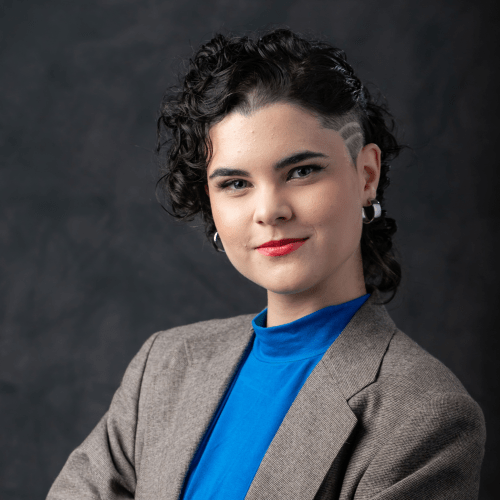
Welcome, Anna—it’s a pleasure to have you on Report for Impact.
Anna Ortega: “Thank you very much for the introduction, Miguel, and thank you for inviting me. It’s a great pleasure to speak with you all and to talk a little bit about our project and our work here in Brazil”.
“Luta Cantada” is a very vibrant story that also takes the form of collaboration, exploration, and presentation across different formats. How was this journalistic project structured—published in all its complexity, featuring various formats and so many perspectives from the Amazonian communities—?
Anna Ortega: “To answer your question, I first need to talk a little bit about what we do here at Nonada, our organization, because we’re based in southern Brazil and for the past 15 years we’ve been working in journalism focused on culture—a deep dive into culture through artistic expressions, as well as popular culture, the culture of Indigenous peoples, and traditional Afro-Brazilian cultures.
So this is work we’ve been doing for some time, and it’s very important to us to address climate justice through the lens of culture and through our reporting and journalistic work.
So, when we won that grant from Syli and ClimateXchange, we began to ask ourselves how could we build on what we’re already doing—but in a slightly more creative way—and how to expand the perspective we already have. We asked ourselves what stories we’re telling about the climate and how to reach more people in a sensitive, creative way that might not be so obvious.
So, we have a very strong connection to the Amazon region; many of our reporters are based there, and as we all know, over the past year, Brazil’s Amazon region was in the news for a bit longer than usual because of the COP and everything that happened in terms of international politics. So we were concerned—we didn’t want people, or us journalists, to stop talking about the Amazon because, well, last year it was very much at the forefront of the news agenda, but this year we can see it’s not as prominent because COP is now in the past, and since, we have to keep current affairs in a more creative way.
So, we were, searching and reflecting a lot—we really like to engage in that collective reflection on how to conceive and how to create our journalism—and that’s when we started thinking about the culture of the Amazon and the agents, the artists, and the people who work with music—and that’s how “Luta Cantada” came about: the struggle of Amazonian music for climate justice. Little by little, we realized that we wanted the story to be more than just text; we wanted it to be a whole suite of expressions—like a multimedia production—but not just in the sense of checking off a list of elements like “text, video, photos…” but so that people reading the article could also feel, experience, and reflect on the climate issue through other senses. If we’re talking about culture, we want people to engage their emotions as well—not just to think, but also to feel.
So, that was a central part of our work, and it’s reflected in the colors we chose, the playlist, and so on. That’s a bit of what we had in mind when creating “Luta Cantada”.
Let’s delve a little deeper into that concept: in what ways does music—and Amazonian music in particular—serve as a means of raising environmental awareness and defending the territory?
AO: “That’s something we’d really like to share with the readers of this article. There’s a lot of talk about the climate in Amazonian music, and we already knew a little about that history, but working on this article allowed us to see that people have been talking and singing about the climate and the territory for a long time—more than 40 or 50 years.
Climate issues and themes are present and deeply embedded in genres like rap and Karim Bo—which is very traditional in northern Brazil—as well as in the music of Indigenous artists. This allowed us to hear about the climate in a way that’s different from the language we’re used to hearing in weather reports or from the climate experts we always listen to.
It’s incorporated in a different way—not just with the intention of understanding or focusing on the climate and nature, but as part of spirituality, culture, and life.
So, the songs we discovered and discussed in the report speak of the river, the mountain spirits, the earth—everything that is part of nature is part of our lives. And there are people we interviewed in the report who have been talking about the climate since the 1980s or 1990s, or in the early 2000s, and they were already talking about the serious problems in the Amazon and what was happening with deforestation and everything related to climate change—though they didn’t call it “climate change”—but they sang about water, they sang about fire, they sang about the extinction of animals, seeds, or foods that can no longer be produced the same way.
So, what we found is that art—and especially music—had already been speaking and singing about these issues for a long time.”
What other lessons can we draw from these experiences—both from the indigenous peoples and from you as a journalism team immersed in this territory and in constant dialogue with the communities—that might serve as a model for journalists and communities in other regions of the world? What can they learn from your experience in this environment, particularly in the process of producing a report like this one, “Luta Cantada”?
AO: “I think a major lesson we’ve learned from producing this report—and one that carries over to the work we do at Nonada—is understanding that climate experts aren’t just scientists or people within universities, or even us journalists; we aren’t usually the only ones who can speak about climate change. I believe this can be very helpful for journalists because sometimes we stick to very safe paths and already know who to listen to when discussing, I don’t know, a topic like water, for example, or an extreme weather event—and we shouldn’t forget to listen to the people who are connected to nature and the land every day, or who have diverse visions and perspectives—viewpoints that are often not understood, considered, or heard as important, but who do have a lot to say. Being able to meet them directly and include them in this report was a great learning experience. It might also make us reflect and ask ourselves who the sources are that we usually consult for our reports, and how we could sometimes also consider that culture and the people who create culture are often interesting voices to draw on when thinking about climate or issues in the contemporary world.
I feel that in cultural journalism, we sometimes view culture as a minor field—or one that isn’t very important—or as belonging solely to the realm of entertainment. But the truth is that culture is connected to everything: the climate, the economy, and politics. And if we shift our perspective just a little, I believe we’d find new ways of looking at important global issues. And culture is a force that moves us, that touches us, that raises our awareness in some way—and I do believe that culture is often somewhat overlooked and its value goes unrecognized.
So this report shows us that music is often also a way of learning and reflecting, not just entertaining. I think that’s a valuable lesson, and that in other projects and reports, we could also include more of these kinds of reflections.”
How can we ensure that the creators of Amazonian culture are recognized as key players in this fight against the climate crisis and in the protection of ancestral knowledge? What do you think is needed for them to get that recognition?
AO: “I think there are two things we perhaps overlook and that we should care more about. As I mentioned a moment ago, we often seek out only experts from academic circles and the scientific community.
This isn’t just a problem when it comes to climate issues; in general, we sometimes fail to realize that oral tradition, ancestral heritage, memory, and all those elements—which are so powerful and deeply rooted in the Amazon region of Brazil, as well as in other countries—constitute a form, a mode of knowledge. And that’s fundamental, but I think it still poses a challenge for all of us—not just a specific group—but it’s an issue that has to do with the way we conceive of what knowledge is.
I think that often we don’t understand that knowledge held by indigenous and riverine communities living near the water—and also by the “quilombos”, which feature prominently in the report. We don’t understand it; we don’t recognize it as a genuine form of knowledge or as a way to propose solutions for what we might do in the future. That’s something I believe is missing, and often we also need to get to know those agents, those artists.
I think our goal with this report was also to create a space where these stories and their motivations could be shared—and who knows, perhaps that will inspire others to learn more about their experiences and those of others, because there are many who aren’t necessarily featured in this story, but we need to make a greater effort to seek out other sources, other people who aren’t necessarily on social media. It’s almost a physical effort—we need to reach out to other people and other communities and always ask ourselves from what perspective we’re approaching this story, whether we’re trying to bring new perspectives—and I think that could be important for ensuring that Amazonian communities are seen and heard more. And of course, one of the roles we always have when talking about these populations is to deconstruct existing stereotypes and think beyond just the environment or the jungle—which is certainly very important—but to think beyond that and focus on the people, on their humanity. Because humanity is often forgotten, and people focus only on the environment, but we also need to think about the humanity of those people, and I believe that music, culture, and journalism are important for us to be able to consider all of that.”
Earlier in our conversation, we were talking a bit about Nonada. Why don’t you tell us a little about Nonada? How did it come about, and who are the people behind this experiment in communication, journalism, and culture?
AO: “Nonada is an organization based in Porto Alegre, in southern Brazil. It began as a journalism collective with a strong focus on culture—initially more local, but over the years it has expanded to a national scope. Our vision of culture is rooted in the idea that culture is a way of understanding the world and also a means of creating new perspectives on it.
And since we take our cultural journalism and the idea behind Nonada very seriously, the core concept emerged from the understanding that we could go beyond the usual agenda—because for many people, and for us as well, the conventional image of cultural journalism is closely tied to the idea of interviewing artists or telling people about upcoming events in a city. Our cultural journalism takes a different approach: connecting culture with human rights and climate change.
Memory is also very important to us—telling stories that aren’t widely known, such as those of the “masters” we refer to here in Brazil: the elders who have made significant contributions to Brazilian culture but whose stories often go untold. We also have a strong connection to education, so we carry out cultural, social, and educational projects alongside our journalistic work.
We have a core team and reporters from all over Brazil, because one of the ideas that drives us deeply is to report on a region from within that region itself. So, we report on the Amazon from within the Amazon, on northeastern Brazil from within northeastern Brazil, and so on for the other regions. That’s something that really drives us. Our reporting reflects this approach. We don’t publish every day; instead, we publish at slightly longer intervals, prioritizing in-depth, high-quality content that is connected to the communities.”
Now I’d like to ask a bit about your revenue and funding model—how is Nonada supported?
AO: “Nonada is supported by grants—not only for journalism but also for our cultural, social, and educational projects.
Much of the funding we receive comes from Brazilian public policies supporting culture, and we’re now also one of the organizations supported by the Journalism Support Fund—the first such fund, launched this year, which will support organizations for the next three years.
So our funding comes from different sources, but all of them are directly related to our projects and help ensure our editorial independence, which is very important to us.”
Now, I’d like to ask you: What was your experience with this grant? What is the scope of a project like this? We know that funding resources are never enough—how do you build partnerships that enable journalistic work like this?
AO: “This grant was very important to us because we work this way with grants and projects—it’s part of our routine—but this one in particular was extremely interesting because, beyond the financial support we received, we also had mentoring sessions with the editorial teams at Syli and cXc.
We had a very interesting experience with both the impact team and the editorial team. I think this was important because connecting with people who work in a different field and have different perspectives—and seeing how that slightly changed the direction of the project—led to a lot of discussion and reflection between them and us. So even the idea of creating a playlist and the concept of making small booklets—and how to print and distribute them to people sharing the report—were ideas that came out of the sessions we had with them.
So it was a grant that, beyond enabling us to carry out our journalism and supporting us in that work, also provided us with a kind of training—an aspect that’s also reflected in the report. Perhaps someone reading it might not realize that this process took place and that it was a collective effort, but many of the ideas in the final product stem from the way the grant was managed and organized.
That’s a bit about the process, and of course, as for funding, we always work within what’s financially feasible; we’re always trying to do the best we can with the resources available to us at the time.”
Thank you very much for agreeing to have this conversation with us. It’s been a tremendous pleasure to talk with you and learn a little about how this story—this beautiful work—came about, and to have had the opportunity to enjoy reading your work and learn so much more about what’s happening within Amazonian cultures through music.
AO: “Thank you, Miguel. Thank you for the opportunity, for your interest in our work, and for sharing our work with others—that makes us very happy.”
For information and content from Nonada, please visit https://www.nonada.com.br/
“Sung Struggle: How Amazonian music has been raising awareness about climate change for at least three decades https://www.nonada.com.br/luta-cantada-a-musica-do-norte/