

By Miguel García
In this new Q&A in Report for Impact we are joined by two Salvadorian journalists, Jimena Aguilar and Andrea Burgos, they are co-creative directors of Alharaca from El Salvador.
According to the description on their website “Alharaca is a feminist media outlet that works collaboratively at the intersection of journalism, art, academia and new technologies. It’s a feminist space because it’s a form of resistance, of possibilities and a network to support ourselves and others.” Alharaca receives support from Report for Impact, and today we invite them to talk about their growth and consolidation, their sustainability strategies, the present and future of their venture.
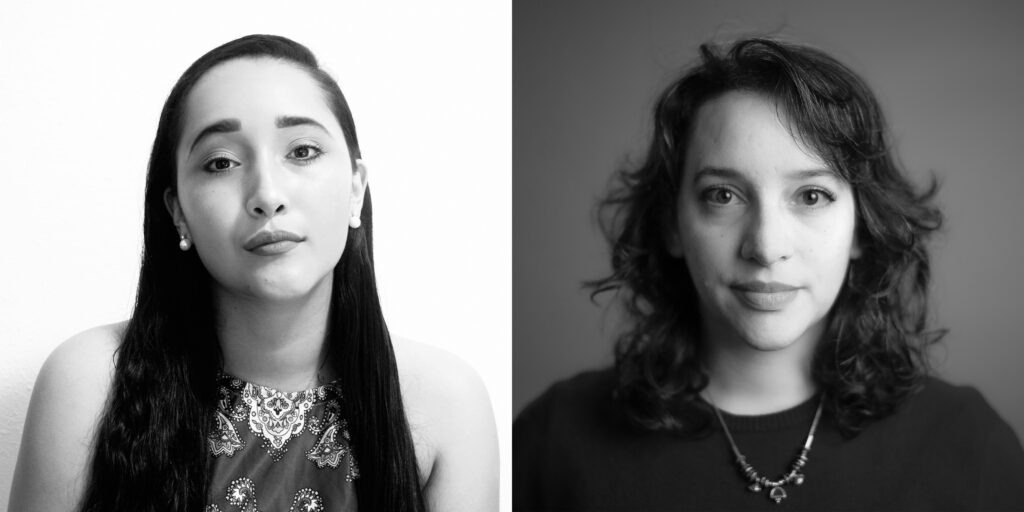
Report For Impact: Andrea and Jimena, welcome and thank you for joining us.
Jimena Aguilar: Thank you for the invitation, Miguel. Nice to be here.
Andrea Burgos: Hi, Miguel. So happy to be here. Thank you.
RFI: I would like to begin by asking you to give us a brief overview of how Alharaca began and how your project is developing in such a changing environment and what is your editorial approach?
Jimena Aguilar: Well, Alharaca started in conversations between Laura, Lia, Gabriela and I, the four co-founders around 2016. We applied for seed funding from Premio Idea at the end of that year and got it and started that project in 2017. And officially, we co-founded the organization in 2018, but it had been already in the works for a while.
And I think the main thing that drove us to decide for co-founding the outlet as an outlet was the need to have a space for our own to be able to decide in terms of administration, financing, but also the editorial aspects of her work because from the start we recognize ourselves as a feminist journalist and we knew that there was resistance about these terms in independent and traditional media and we felt the need to have this room of our, as Virginia Woolf would say, but also to provide a space for safe practice of journalism, especially for women and people from the LGBTQI community and other other people of minorities that sometimes have difficulties in traditional media; and our main global approach is to have a gender perspective in everything we do not as a not see gender as a niche subject, but as a subject that trespasses us. That’s not the word in English… a subject that crosses every aspect of our lives, be it economy, human rights, um or political debates. Gender is a key aspect that the world we live in can be interpreted through.
RFI: I wanted to ask you, what is it like to report on gender issues from a feminist point of view in a context where rights and gender rights are at the center of discussion?
Andrea Burgos: It’s challenging because many of our colleagues and many of other outlets including El Salvador are focusing on other issues that are calling the big issues. Geopolitics or migration, violence, which are of course very important, but as Jimena said, they all have the gender component and we don’t have to lose that from sight. But sometimes it’s like in the practice it is like uh you have to have some other issues covered in order for you to be able to talk of gender, It comes like a second thing. But in our case, it’s something that is most wanted. It’s when we need to talk more about this. For us it’s a challenge also in the way we operate because we are uh hybrid um well we are always working online.
Even the crew that it’s in El Salvador, they are always like in meetings online and it has to come to a collaborative environment for us to be able to get through all these challenges and to trust each other and to make interdisciplinary decisions in some ways. And that’s something that has been with us since the beginning. When I started in 2020, we were in the pandemic. So we were already working in this way. And it’s the only way I think that it’s been able for us to get through all the challenges and to continue with the work we’re doing.
Jimena Aguilar: And if I may add something, right now the context is that there’s a rise in right-wing extremism in authoritarian regimes coming up popping up everywhere in the world. And one of the key features of these movements is that they have a very clear agenda against the LGBT community against migrants, trying to control women’s bodies, and there’s a very clear narrative in this regard and these are signs of these types of regimes developing.
And so voices that can be the first to call this out to notice the designs and raise voices against this are very important. And it’s not always seen like that, as Andrea was mentioning, but we saw the science in El Salvador, the science in the US are there, and this is a common threat throughout these types of regimes.
RFI: With the end of cooperation from sources such as USAID and the turmoil in different parts of the world, cooperation resources and donations are becoming increasingly scarce. What’s Alharaca’s commitment and proposal for generating income, revenue and sustainability?
Jimena Aguilar: Well, as everybody or a lot of the world, we were also shocked by the events in January with USAID. And also this is not only or at least that’s how we read it. It’s not only about this particular institution, but it’s a shockwave to the system. And we’ve been from very early in our journey. We know that trying to find sustainability is very important. So we’ve been thinking about this before 2020. 2025, right? But that year, especially with what happened in January, then in El Salvador, all the developments in El Salvador, it was no longer we need to think about this, but we have to think about this. There’s no other option. So last year was a lot of transformation for us, a lot of thinking and rethinking, how are we going to work, what is our future going to be like. And what we’ve come up with is a strategy to leverage the transnational identity of Alharaca. Alharaca was always a project that was distributed in different parts of the world. It is a Salvadorian project, but it was born from the Salvadorian diaspora. And we want to leverage this. So we’re thinking a lot about doing in person events, innovating in technology or the formats we tell the stories with a lot about changing our relationship to our audiences, thinking outside of the social media algorithms and other ways that we can connect with.
Andrea Burgos: I would like to add just something to that because this is something that Jimena has worked a lot on and that has allowed us to keep going in 2025. And it, like she said, it’s something that was working before this date and whatever happened in USAID and all the events of 2025. And it’s not dependent on just one project. As I said, we have a lot of collaborative work, but that also means expanding our relationships with different projects, different media, and different outlets. And it helped us to make some decisions. That we were able to take, especially like I said, Jimena, and Laura, who have worked in SEO and since that labor was able to make decisions and not just have this shut down, that many other outlets experienced in 2025. So yeah, I think that it’s very important because sometimes when there is small media, there is the necessity of someone doing this kind of work for others to be also making the other roles known, that are more well known for journalists and other kinds of work in progress. But in this case, it is very important, I think, for all the work that ‘s been done in the planning and everything that went before the events of 2025, as they said.
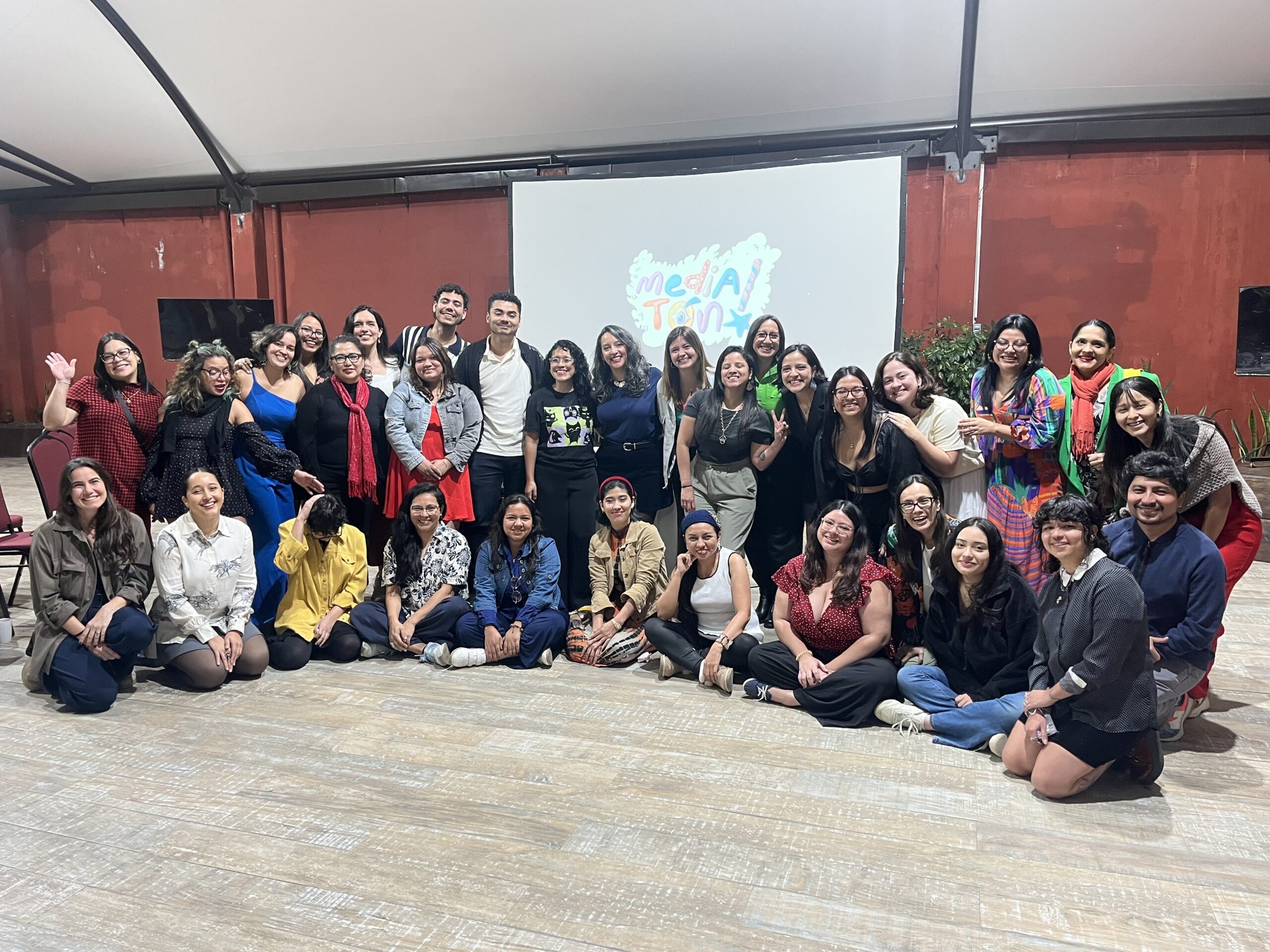
RFI: Let’s talk a little bit about the Mediatón project. How did it come to be? What are the changes that have been made since it all started? And what’s what you’re planning for the future for this project?
Jimena Aguilar: We describe the Mediatón as a journalism innovation lab. We’ve been thinking about it in different ways for a few years now because innovation has been at the core of Alharaca’s work since the get go from thinking about how to use social media to have a different relationship with audiences who are developing locative audio documentaries. We’ve been experimenting with technology, but also with different formats, such as comics, audio, and video. So in 2024, we launched this project as a way also to share knowledge, to have a look behind the curtain into how Alharaca works. what methodologies we use for developing our projects. This is a project that is a lot about working iteratively with prototypes and then developing the final project.
So coming a lot from design thinking. And in 2024, we launched it as a project in El Salvador for Salvadorian journalists, people working in communications, in audiovisual production, and illustration and design. And in 2025, it grew to more the Central American region, but we also already had applications for the Meditón from other countries like Peru, Chile, Brazil, Mexico. And for 2026, we’re planning to expand it to include people from outside the Central American region.
RFI: What do you have in mind? What are the changes proposed for this edition of the Mediatón?
Andrea Burgos: Well, just as Jimena said for Latin American audiences, we really want to use all the power that we’ve seen that Mediatón has, because the audiences have shown us that they have a lot of engagement with the products that we are doing here. And also with the methodology, because it’s very important that it is a hybrid methodology. So we’re able to get the best of the virtual formative stage, but also when we are able to finally meet each other to also get the best out of it.
So in this year, yes, we’re trying to make the best out of the learnings that we had by 2025 because we are also making iterative learnings from what we are doing in the Mediatón along the way. And I think that we have reached a point where we are able to experiment even a little bit further than we were able in 2025.
Jimena Aguilar: And just to mention a few core elements of the Mediatón. As Adrea mentioned, collaborative processes are very important, not only for the participants, but for us. So the participants, for example, are working in groups, sometimes from people who didn’t know each other before and developing a project. So it is a hurdle, but also a challenge and a way to get to know other people. Uh And of course, that requires a lot of effort and work and dynamics to manage relationships. But this is a core element of Alharaca as well. So for the organization of the Mediatón we first organized it just us as Alharaca and then in 2025 we did it together with Asociación Cultural Azoro, which is an ally organization from us from when we started but this was a new development in our relationship and next this year 2026 we’re organizing the Mediatón together with Sulá Batsú an organization in Costa Rica who is working in new technologies, social justice, and the environment. So we’re also expanding that part of the Mediatón.
RFI: Now that, what you mentioned before, the engagement with audiences, what do you think or what has been the response that you’ve been getting from audiences and what and about that engagement? How is it working for you?
Andrea Burgos: It has been a great engagement, like I said. Last year, we received 101 people who wanted to be in the Mediatón from eight different countries. And we kind of compare that with another project that we did last year, that is Cambia la Historia that we did with Deutsche Welle Academy. And we had a very good response if we compare it because Cambia la Historia was targeted for all Latin America and Mediatón was only for Central America. And still we had a lot of responses. And we think that it has to do a lot with the fact that we’re not just scoping for journalism, but also for communication and for design. And this is like um well, like I said, the collaborative work is something that is very appealing for people. So that’s one thing like people who want to come and be part of the Mediatón. But also with the products, they have had the highest engagement in 2025. Like Mediatón, there’s this comic who was one of the most shared and it has the highest numbers in our Instagram account. And also we had this other series in 2024 that is called La Sangronas, which started as a Mediatón product, but went by 2025 because it also has had this kind of engagement with the audiences which is talking about menstruation and other things, but menstruation mainly. And there’s not much content about this. So this podcast has been very regular and very constant in our work last year.
RFI: What is what you’ve been working on to propose for this year’s edition of the Mediatón?
Jimera Aguilar: So first, we’ll be working together with this organization from Costa Rica. It will be again in Guatemala for a couple of days as an encounter and we’ll be working on the topic of the impact of digital technologies on bodies, territories and ecosystems from the point of view of the main theme, which is the impact of digital technologies on gender-based violence. So we also expect to invite around 30 people to join this process, and have this virtual phase, then a production phase and finally the meeting in Guatemala, which we think is going to be around September of this year. And I think we’re very excited also to interlace the work of the Mediatón with the innovation work that we’re doing in other projects. We’re working on a nonfiction game and a live podcast as part of a live journalism project. And we think that the Mediatón is also a place where we can test, share with our audiences because the participants are not only colleagues, but also are very very much part of our audiences. So it’s a space also where we can have close encounters with audiences and create a community that goes beyond the training program.
You can find more information, coverage and projects at alharaca.sv