

As carbon markets expand rapidly across Africa, promising climate solutions and new funding streams, investigative journalism is playing a critical role in scrutinising who benefits — and who bears the cost. Carbon Colony: Inside the War for Maasai Community Land, an investigative documentary produced by Africa Uncensored and directed by journalist Martin Siele, is a powerful example of how public-interest reporting can surface the real-world impacts of global climate finance on local communities.
The film investigates a controversial carbon offset project in Kajiado County, Kenya, where Maasai pastoralist communities say decisions about their communal land were made without meaningful consultation or consent. What was presented as a climate and development initiative instead triggered protests, resistance, and deep concern over land rights, governance, and accountability.
At its core, Carbon Colony asks a question increasingly relevant for journalists worldwide: how do global climate solutions intersect with power, land, and justice on the ground — and who is responsible for ensuring transparency?
Exposing the accountability gap in carbon markets
Carbon offsetting has become a central mechanism in international climate strategies, particularly in the Global South, where land-based projects promise to sequester emissions while delivering economic benefits. Yet regulation of voluntary carbon markets remains uneven, and oversight is often weak.
Through months of reporting, Africa Uncensored documents how these gaps can leave communities vulnerable.
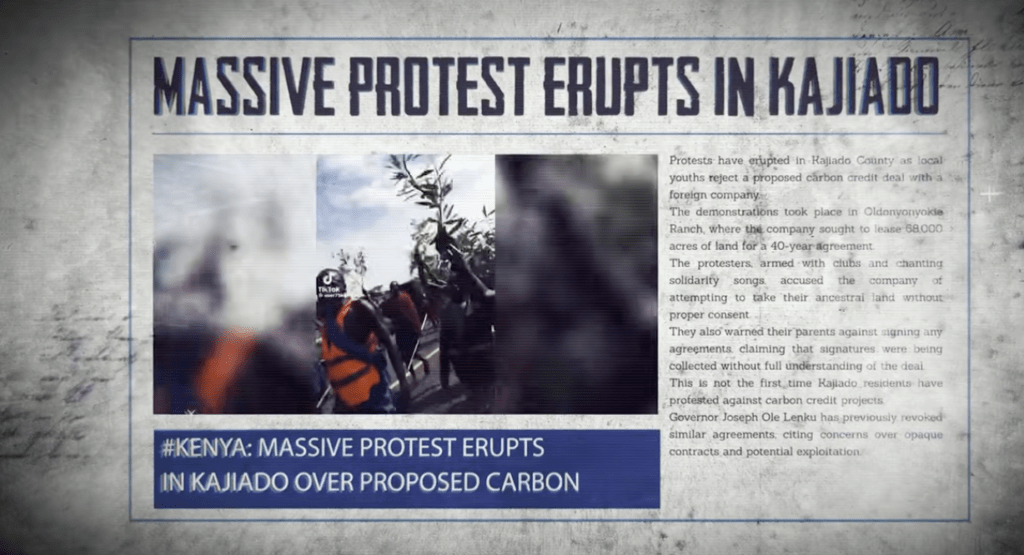
The documentary traces how a carbon deal involving Maasai communal land moved forward amid allegations of opaque negotiations and elite influence. A key moment captured in the film is the disruption of a public signing ceremony by Maasai youth — an act that signals not disorder, but dissent. As the investigation reveals, many community members felt excluded from decisions that could reshape their land use, livelihoods, and future.
By examining contracts, governance structures, and community testimony, Carbon Colony highlights the risks that arise when climate finance outpaces legal protections for Indigenous land.
Why Indigenous land rights matter for climate reporting
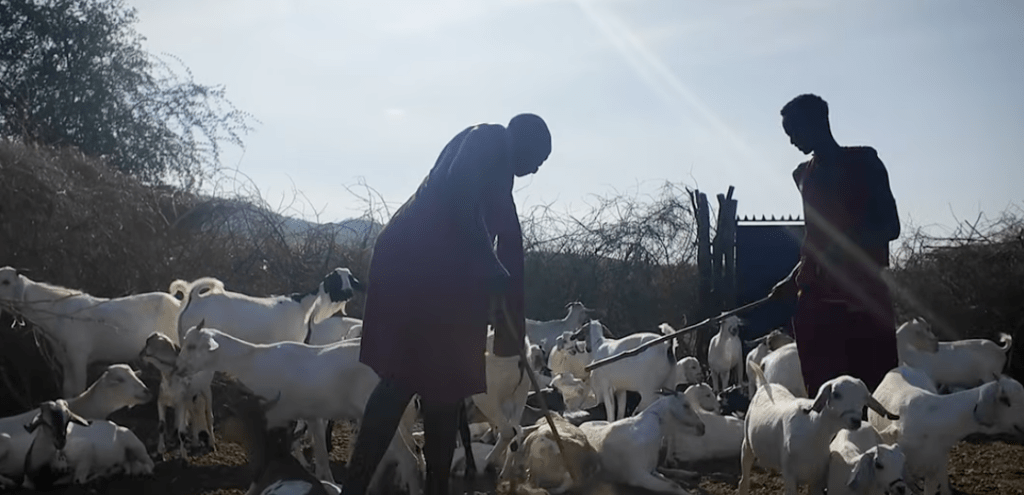
For Maasai communities, land is not simply an economic asset. It is central to cultural identity, pastoral livelihoods, and survival. Restrictions on grazing or land access — even when framed as environmental protection — can have severe social and economic consequences.
The film places this contemporary dispute within a longer history of land dispossession in Kenya, from colonial expropriation to post-independence privatization and conservation schemes. Carbon markets, Carbon Colony suggests, may represent a new iteration of an old problem: land being redefined and controlled through external systems, with limited local agency.
This framing is essential for impact-oriented journalism. It connects climate policy to human rights, governance, and historical accountability — areas where independent media play a crucial watchdog role.
Journalism in the public interest
Directed by Martin Siele, a producer and investigative journalist with Africa Uncensored, the documentary reflects a rigorous, evidence-based approach to storytelling. The investigation combines on-the-ground reporting, document analysis, satellite imagery, and interviews with community members, officials, and experts.
Rather than positioning itself as anti-climate action, Carbon Colony focuses on how climate action is implemented — and who is excluded from decision-making processes. This distinction is central to its impact. The film challenges audiences to consider whether climate initiatives can succeed without transparency, accountability, and free, prior and informed consent.
Founded in 2015, Africa Uncensored has built a strong track record of investigative reporting across East Africa, exposing corruption, environmental harm, and abuses of power. Carbon Colony extends that mission into the rapidly growing — and still lightly scrutinised — world of carbon finance.
Impact beyond the screen
Since its release, Carbon Colony has contributed to broader conversations about “carbon colonialism” — a term used by critics to describe climate solutions that replicate extractive dynamics under environmental narratives. The documentary has been shared widely online, sparking debate among journalists, climate advocates, and policy observers about the safeguards needed to protect community rights.
For newsrooms, the film underscores the importance of local investigative capacity to interrogate complex global systems. Carbon markets operate across borders, but their impacts are deeply local. Without independent journalists embedded in communities, these stories risk going untold.
Why this story aligns with Report for the World
Carbon Colony exemplifies the type of journalism Report for the World exists to support: deeply reported, community-centred investigations that hold powerful actors to account and illuminate under-reported issues with global significance.
As climate financing reshapes economies and landscapes across the Global South, journalists need the resources, time, and editorial backing to investigate not just environmental outcomes, but governance, consent, and equity. This film demonstrates how visual and investigative journalism can work together to make complex issues accessible — and urgent — for wider audiences.
A call to watch and engage
At a moment when climate action is accelerating faster than accountability mechanisms, Carbon Colony: Inside the War for Maasai Community Land offers a necessary intervention. It reminds us that climate solutions are not neutral — and that without scrutiny, they can deepen inequality rather than resolve it.
For journalists, newsroom leaders, and supporters of public-interest media, the documentary is both a warning and a model: a warning about the risks of unexamined climate finance, and a model of how investigative reporting can surface truth, centre affected communities, and drive informed debate.