

From reporting on global markets for Reuters to producing award-winning audio documentaries and training the next generation of journalists, Anupama Chandrasekaran has built a career around one simple idea: good journalism starts with curiosity.
Over the past two decades, she has worked across print, audio and solutions journalism, collaborating with international news organisations, community radio stations, and independent newsrooms across India. Today, her work sits at the intersection of journalism, training, and storytelling, exploring how journalists can better serve communities through deeper reporting, stronger narratives, and more meaningful engagement.
Ahead of her Surfing Sound Waves masterclass for Report for Impact (which you can sign up to attend here) we spoke with Anupama about the power of audio storytelling, why grassroots journalism matters more than ever, how solutions journalism can rebuild trust, and the skills journalists will need to navigate an increasingly complex media landscape.
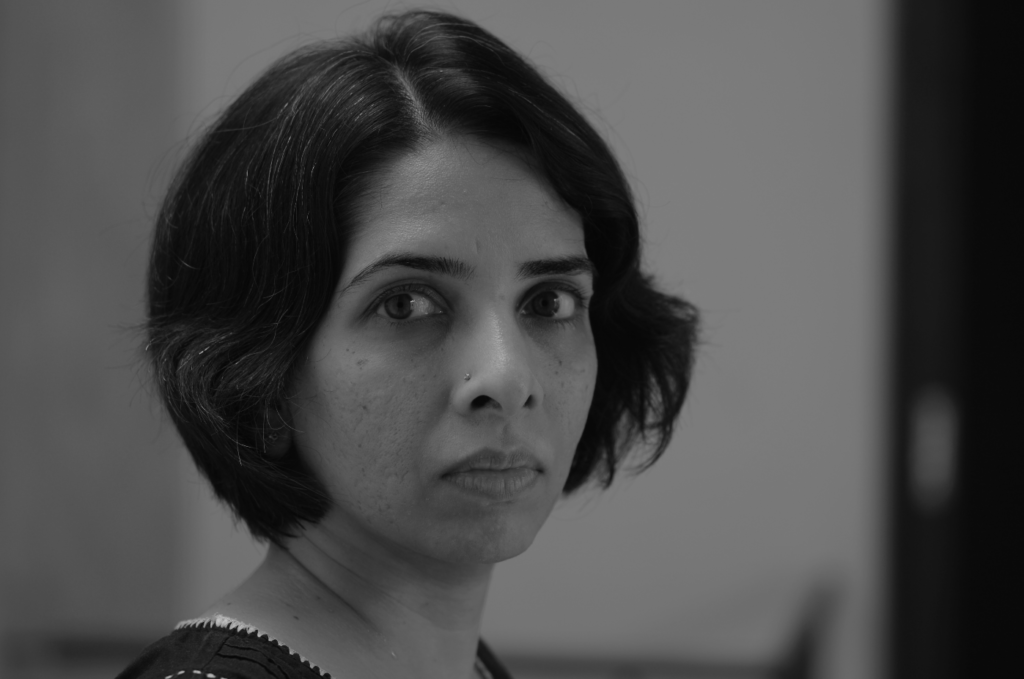
You’ve worked in newsrooms from Reuters in New York to leading a bureau in India and later as an independent journalist and trainer. Looking back, what moments shaped the journalist you are today?
The smaller moments have often mattered more than the big milestones. I still remember listening to graphic novelist Joe Sacco speak in an international reporting class at NYU and was amazed at his drive, his empathy and the form he chose for storytelling. More recently, while I was at The Hindu, I spoke with someone who works to protect journalists. As they teared up talking about the deaths of reporters in conflict zones, I was reminded that there are people who still care deeply about our world. Even as a rookie reporter at Reuters, taking calls from journalists in Mexico, Japan, Kenya and Paris showed me how united people across the world are in the pursuit of truth. Those conversations, more than any single assignment, shaped how I think about journalism.
Your work spans print, audio documentaries and podcasts. What draws you to audio storytelling, and what can it do that other formats can’t?
Audio feels intimate in a way that few other formats do. Like reading, it invites people to imagine the world you’re describing, but it also lets them hear emotion in someone’s voice; the pauses, the laughter, the hesitation. Those are things that don’t always come through on the page. I also enjoy the craft of writing for audio. It means keeping sentences short, writing the way people actually speak, and trusting the listener to stay with you. Every audio story feels like a small experiment in how to tell something differently.
My love for it probably goes back to childhood. My sister and I were latchkey kids, and we’d spend hours recording ourselves on a cassette recorder just to see what stories we could tell. Later, when I lived in the US, I became an avid listener of shows like Car Talk and NPR’s Fresh Air interviews by Terry Gross. My love for audio grew exponentially after I started listening to NPR’s Planet Money podcast that broke down economic concepts for lay folks. I am an audio nerd.
In recent years you’ve worked extensively with community radio stations and local journalists across India. Why do you believe grassroots reporting is so important right now?
Grassroots reporting is, quite literally, about getting to the root of issues. Community radio journalists and local reporters are deeply embedded in the places they cover. They often spot changes, tensions and emerging challenges long before they become national stories.
What I find equally valuable is that such work also helps uncover local, often low-cost solutions. They show how different communities respond to the challenges they face, and those responses are often shaped by the unique culture, geography and realities of that region. If you want to understand a country as diverse as India, you have to start with the people who know their communities best.
You’ve spoken about solutions journalism as a way to empower communities rather than simply document problems. How has that approach changed the questions you ask when reporting a story?
That shift opens your mind. It moves you from simply being critical to looking for ideas that could help others facing similar challenges. It’s not about ignoring problems or becoming optimistic for the sake of it. It’s about understanding what has worked, where it has worked, and whether those lessons can travel. In that sense, you’re not just documenting the question—you’re also helping people explore possible answers.
Many journalists worry that audiences are becoming overwhelmed by negative news. Can solutions journalism help rebuild trust without sacrificing accountability?
Absolutely. But only if it’s done properly. Solutions journalism isn’t about feel-good stories or putting a positive spin on difficult issues. It’s rigorous reporting that examines a response to a problem, looks at the evidence behind it, is honest about its limitations, and asks whether it could work elsewhere.
That approach doesn’t weaken accountability, it actually strengthens it. You’re still holding institutions and systems to account, but you’re also asking what can be learned from people who are making progress. I think that helps rebuild trust because audiences don’t just want to know what’s broken. They also want to know whether change is possible. Seeing evidence that problems can be addressed reminds us that we all have the capacity to improve the world around us.
You’ve reported for international publications while also working closely with local communities. How do you balance global relevance with stories that remain deeply rooted in local contexts?
Many communities across Asia, Africa and Latin America are dealing with remarkably similar challenges.
For me, the balance comes from reporting local stories deeply enough that their broader relevance becomes clear. A story about children born with HIV in India or about human-wildlife conflict may be rooted in a specific place, but the questions it raises—about healthcare, inequality, conservation or public policy—resonate far beyond India’s borders.
The more authentic and grounded a story is, the more likely it is to connect with audiences elsewhere. Local stories often have global significance; you just have to tell them with all its complexities and details.
You’re also a media trainer. What’s the biggest challenge you see facing early-career journalists today, and what skills will they need to thrive over the next decade?
The biggest shift I’d encourage young journalists to make is to stop thinking of themselves as print, television or audio journalists. Think of yourself as a communicator. The platform will keep changing, but the ability to explain the world clearly will always matter.
That also means becoming comfortable with data. In the age of AI, data literacy is just as important as writing. It helps you spot trends, compare evidence, uncover patterns and translate complex information into insights that people can understand.
Ultimately, the goal is the same regardless of the medium or technology. Learn whatever tools help you tell the story better. Good journalism should help people understand the issues that affect their lives, participate meaningfully in democracy, and hold institutions accountable. Those skills will remain valuable no matter what the next decade brings.
Data journalism, audio production and AI are all changing how stories are told. Which developments excite you most, and which ones do you approach with caution?
Audio will probably always remain my first love. I’m an avid listener, and I enjoy every part of the process—from recording and scripting to mixing and sound design. There’s something incredibly satisfying about telling a story through sound and allowing listeners to experience emotion through a voice. That’s something I dig.
I’m also excited about the growing importance of data journalism. As information becomes more abundant, the ability to analyse data, identify trends and translate numbers into meaningful stories will become even more valuable. Of course, it’s only as good as the quality of the data behind it.
AI is a little different. Like every major technological shift, it will bring both opportunities and challenges. It can make journalists more efficient and open up new ways of reporting, but it also increases the risk of low-quality, repetitive content. I think audiences will eventually recognise that difference. In a world flooded with AI-generated material, thoughtful, original reporting will become even more valuable.
Your career has covered business, economics, gender, science and the environment. Is there a story you’ve worked on that fundamentally changed how you think about journalism’s role in society?
One story that has stayed with me is The Dalit Non-Cookbook. Through food, music and the voices of the people I interviewed, it explored a history of caste and violence that had, in many ways, been hidden from me too.
Reporting that story reminded me that journalism isn’t just about uncovering facts—it’s about helping people experience a reality they may never have encountered. As I discovered things that challenged my own understanding, I hoped listeners would go through that same journey of discovery.
That’s the role journalism can play at its best. It doesn’t just inform; it expands our understanding of other people’s lives and makes the invisible visible.
If every journalist left an interview asking just one better question, what would you hope that question would be—and why?
I’d hope it’s a question that comes from genuine curiosity—something that’s been running deep inside you because you know it matters to the people whose stories you’re telling. As journalists, we’re not just asking questions for ourselves; we’re asking them on behalf of the public.
The best questions aren’t always the cleverest ones. They’re the ones that get to the heart of an issue, uncover something real, and give people answers they genuinely need. That’s the responsibility we carry every time we walk into an interview.