

By Miguel Garcia
As Press freedom indicators decline, is there hope for the press in Latin America?
Organizations defending press freedom in the Americas are warning of a decline in freedom of expression across the region. In its latest report, RSF sounds the alarm: press freedom has fallen to its lowest level in 25 years: “For the first time in the history of Reporters Without Borders’ (RSF) World Press Freedom Index, more than half of the world’s countries are in a ‘difficult’ or ‘very serious’ situation. In the 25-year history of the ranking, the average score for all the countries analyzed has never been so low,” the report begins.
During this period, freedom of expression—and, within it, freedom of the press—is being undermined by legislative packages restricting press and NGOs activities that have been introduced in several countries. Judicial persecution and the criminalization of journalism remain a cause for concern regarding the press. According to RSF, the press freedom index in the Americas has declined, “with the United States dropping seven places and several Latin American countries plummeting, mired in a spiral of violence and repression.” In its report from the previous year, RSF had already warned that the worrying decline in sources of media funding posed a risk to press freedom and the sustainability of the media.
Both the Inter-American Press Association and Reporters Without Borders point to significant setbacks in the region, which are also a consequence of authoritarian turns. In countries such as Colombia, Argentina, and the United States, to name just a few, presidents have stigmatized journalists, discredited the work of the press, and, in some cases, dismantled public media or used government advertising as a political weapon. The region is also affected by an increase in judicial harassment, disinformation campaigns, and growing pressure on independent media. Cases of sexual harassment and workplace harassment in the media reported by women journalists highlight the dual vulnerability of press freedom for women: both for being women and for being journalists. The Inter-American Press Association describes a hostile environment for the press in the region, marked by violence, state pressure, institutional restrictions, and impunity.
The sixth edition of the Inter-American Press Association’s Chapultepec Index of Freedom of Expression and the Press, published on 10 March 2026, reports a “dramatic deterioration in the conditions of these communication rights in the hemisphere,” the lowest level recorded since the ranking began.
The conclusions of the Chapultepec Index indicate that among the 23 countries analyzed, two fall into the “No Freedom of Expression” category: Venezuela and Nicaragua. These countries are followed by eight in the “High Restriction” category: Ecuador, Bolivia, Peru, Honduras, Mexico, El Salvador, Cuba, and Haiti.
RFW invited three women defenders of freedom of expression in Latin America to discuss their perspectives on threats to press freedom, the situation, and local context in Latin America; we also asked them about hope and the future of press freedom in Latin America.
First up in this World Press Freedom Day series, Sara Mendiola, executive director of Propuesta Cívica in Mexico.
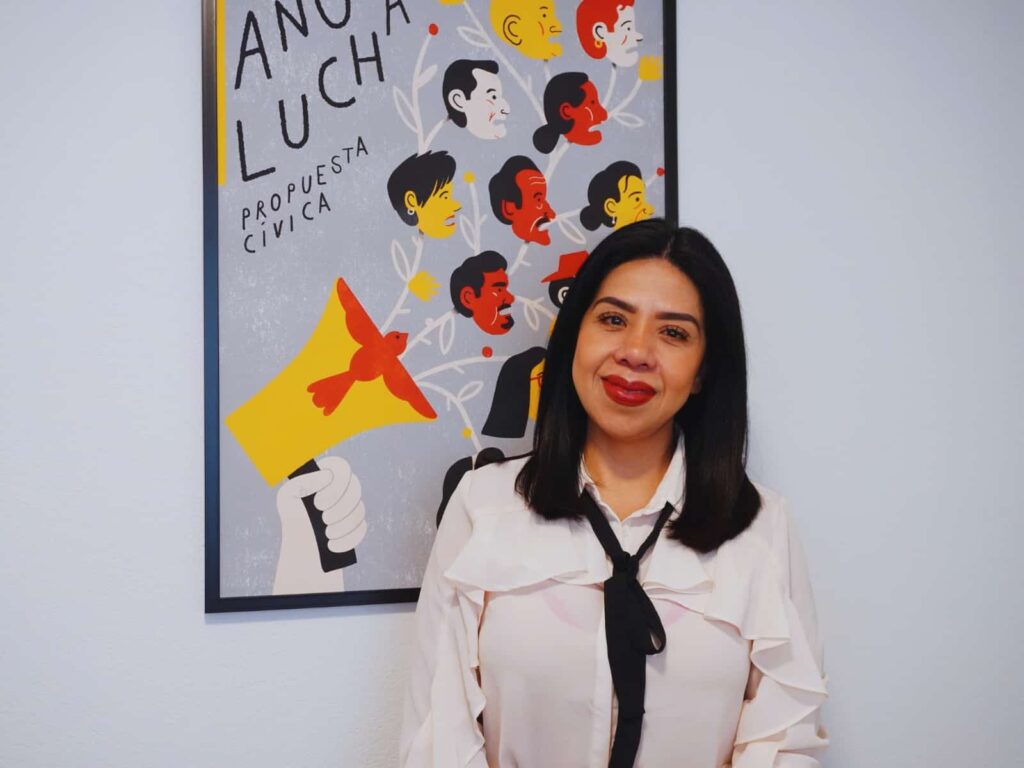
Report For The World: To get this conversation started, I’d like to ask you to tell us about Propuesta Cívica: What are you doing to protect and promote freedom of the press and human rights in Mexico?
Thank you, Propuesta Cívica is a civil society organization here in Mexico that was founded in 2011, and we were established with a very central objective: to defend and provide legal representation to journalists and human rights defenders who have been attacked in our country for carrying out their work. That is indeed the driving force behind Propuesta Cívica.
Initially, Propuesta Cívica focused on many cases involving human rights defenders, but since 2017, the situation in our country has become a bit more complex, and Propuesta Cívica has had to step in to support, accompany, and represent a large number of cases involving journalists and media outlets that were being attacked in the country.
So, today, the groups that Propuesta Cívica represents and supports the most are journalists and media outlets. Alongside this, Propuesta Cívica has strongly promoted communication campaigns. We’ve noticed there’s a very wide gap between society and journalism.
As the great journalist Javier Valdez, who was murdered in Mexico in 2017, once said: “critical journalism, investigative journalism—the journalism that reports on the hell that is being lived in Mexico—is a journalism that stands alone, without society to accompany it”. That is why Propuesta Cívica has strongly promoted awareness campaigns to engage with society, so that there is a social appreciation of what journalism means for a democracy.
We have also devoted significant effort to working on issues of memory with the families of victims—those we represent and support—especially in cases of murdered and disappeared journalists. Unfortunately, Mexico remains the country globally that is still singled out as the deadliest, most violent, outside of a war context—the most violent and deadly country for the press and for those who practice journalism—but also the country where the most journalists have gone missing worldwide.
And alongside this is the other side of the coin: the high rates of impunity in our country. So, today, the work of civic initiatives focuses on these areas: legal representation, advocacy, and raising awareness through communication campaigns.
For a few years now, the Inter-American Press Association has been publishing the Chapultepec Index, and in its latest report, it notes that there are two countries where there is no freedom of expression: Nicaragua and Venezuela, but there is also a group of eight countries in the “highly restricted” category, including Mexico, along with Ecuador, Bolivia, Peru, Honduras, El Salvador, Cuba, and Haiti.
Let’s talk a little about the Mexican context and some cases to see how this deterioration of press freedom in Mexico can be observed.
Unfortunately, the reality is much like what this report describes. Look, attacks against the press in Mexico come from various angles. Whenever people ask me this question, it’s very difficult to answer it from just one perspective because the press in Mexico is silenced, intimidated, and attacked from various angles. From a physical angle in its most deplorable attacks—murder and disappearance. From a digital angle, we have a very rare case in Mexico, the Pegasus case, which was a state-sponsored operation to monitor journalists, human rights defenders, activists, and individuals whom the government considered a risk and needed to be watched.
We also see how, digitally, journalists and media outlets constantly suffer attacks such as threats, having their websites taken down, being silenced online, and being persecuted. Most threats against journalists and independent media occur through these platforms, through social media.
The press is also attacked from a legislative and regulatory perspective, as well as through judicial persecution. We have a very serious problem in Mexico, one that has been escalating since 2018: a surge in civil lawsuits filed under the concept of moral damages. It is primarily political actors and government officials who are strategically using these tools—which are established in our legislation—to protect the right to honor that we all have, but unfortunately, this concept is being turned into a weapon of power because it is politicians and government officials who are using these legal and regulatory mechanisms to attack journalists.
So, there is a serious problem in our country: when a journalist investigates a matter of public interest—an issue involving potential corruption, human rights violations, or narco-politics—the immediate response is a lawsuit for moral damages, exactly as Mexican law allows.
Such a lawsuit drags a journalist into a legal battle lasting 4 to 10 years.
During that time, there is immense strain on every aspect of the person’s life—emotional, psychological, family, and professional—as well as financial strain; legal representation in this country is very expensive, especially in such lengthy proceedings.
We also see how these attacks and judicial persecution have been evolving—they are being used more frequently, but in a much more aggressive manner.
There has been a shift from civil proceedings to criminal proceedings, and recently we have seen cases where media outlets or journalists are being charged with crimes such as money laundering, organized crime, and terrorism.
They are accusing journalists and media outlets of extremely serious crimes such as terrorism and fraud—crimes that in our country warrant imprisonment and, very often, justified pretrial detention—and what is most serious is that judges are agreeing to grant such measures.
Another example that is being severely distorted is in the electoral sphere. Increasingly, the concept of gender-based political violence is being invoked. This is a category introduced into our law against violence to combat violence against women.
It is a form of violence included in this general law, and unfortunately, a concept that was designed to protect the rights of women seeking to participate in public life and the country’s political life is also being used to file complaints against journalists who are exposing corruption when women involved in politics are running for elected office, and this is extremely serious because, furthermore, as this category of gender-based political violence against women currently stands, it has a specific feature: it allows for precautionary measures.
And curiously enough, these precautionary measures require the journalist to retract the investigation they published and to cease publishing.
A rather restrictive precautionary measure that is becoming a form of prior censorship in Mexico at the constitutional level—prior censorship is prohibited in Mexico—but this precautionary measure where a judge orders a journalist or a media outlet to stop publishing about that person involved in politics, about that person whose activities are having an impact on the country’s democratic life and who is also running for elected office, well, judges are essentially saying, “Shut up, don’t say anything; take down what you’ve already published; stop publishing; and stop reporting.”
So, it’s a shame that the mechanism has been transformed—a mechanism that was designed to protect women’s rights has become a mechanism of prior censorship that seeks to impede the flow of information.
We see how the concept of moral damages is a form of retaliation for what you published—now I’ll take you to civil court—but in the electoral context, the goal is to halt the flow of information.
We also see, unfortunately, attacks stemming from political discourse; we saw this very seriously during the previous six-year term under former President Andrés Manuel López Obrador, who seemed to launch a sort of campaign against journalism—against critical journalism, investigative journalism—and began to categorize journalism in this country.
He categorized it as “good journalists” and “bad journalists.” The “bad” ones were those conducting investigations into issues of governance, democracy, corruption, and narco-politics; thus, that critical journalism automatically became an enemy of the government.
These were the journalists whom the government began to stigmatize as “chayoteros” (a derogatory term used to describe a corrupt person who accepts bribes), “fifís” (a conceited person), “sensationalists,” and “anti-regime” journalists.
Generating this kind of discourse coming from the president’s office, in a country that is among the most committed to exercising freedom of expression, made the situation even more complex; it made the practice of investigative journalism even more difficult, and we saw the phenomenon where this discourse began to shape the social imagination, so that society started justifying every attack on a journalist, saying things like: “that happened to him for reporting what he shouldn’t have reported.” Or, “surely, he was on the side of the bad guys in this country.”
And we also saw how this type of discourse began to be replicated by other high-ranking politicians such as state governors, mayors, and politicians who start to repeat exactly the same pro-government rhetoric as the president, and this becomes something very serious because journalism in a democratic country is not meant to be an ally, enemy, or friend of those in power, but rather functions as a channel for transparency, as an actor that scrutinizes and oversees precisely the role of those who represent us.
So, all these schemes where journalism is under attack in our country greatly exacerbate the situation. And underlying that, we have a structural and cultural problem in our country. It is that there is no issue in this country—whether investigating corruption or human rights violations—where narco-politics does not come to light.
So, the narco-politics that exists in Mexico is a fundamental and structural problem we have in the country, and it is an issue that comes to light every time there is a journalistic investigation. Consequently, journalists and the media outlets are no longer just facing the power of the government and the State, but also the power of organized crime.
In several of the cases that Propuesta Cívica has been involved—related to homicides, torture, illegal deprivation of liberty, and disappearances—there are, uh, there are perpetrators who carry out the crime; they are members of organized crime. But those who ordered the attacks are government officials; they are authorities.
It is true that in many Latin American countries, journalism, freedom of expression, and the freedom to defend one’s rights are severely attacked, criminalized, and persecuted in courts and by new bills or law modifications, we’ve seen in the region that changes are being made to the law in some countries to impose restrictions on how media companies and non-governmental organizations operate. Is this also occurring in Mexico?
The situation we have with the tax issue is extremely serious. The previous six-year term of Andrés Manuel López Obrador with the ruling party also launched a comprehensive tax crackdown strategy, arguing that there was a lot of money laundering and also a lot of tax evasion by big business owners.
But the vast majority of society didn’t realize that those reforms weren’t just going to impact and hit the big companies—some of which very likely were engaged in tax evasion—but it was a situation that affected all of us as a society because the law made no distinctions.
The law was applied to every citizen. And in fact, many media outlets were greatly affected by this issue. First, we were already dealing with a very serious issue regarding government advertising, and then the government came along and said, “No more government advertising.” Here, the advertising would come directly from the president himself, and the morning press conferences were established.
This format of morning press conferences was led by the president himself, who determined what constituted the truth and the topics of public interest for debate at that moment. In response to this, they began scrutinizing all the companies that supported a given media outlet, and a crackdown on those companies began.
There were independent media outlets that lived or survived on corporate donations, grants, or international funding, and the government began, through reforms, to try to shut off those revenue streams for independent media, launching a siege against the media and the donor companies. Today, the goal is to ensure that fewer and fewer legal entities have access to donations.
They are revoking permits to act as donation recipients—a basic permit that allows you, as a media outlet, to receive a donation or external funding—and this is also heavily focused on civil society organizations. Because this crackdown has also targeted civil society organizations. Morena, the ruling party in Mexico has made it very clear that it does not like civil society and has tried to strike hard at it; in Mexico, a prime example is the organization Mexicans Against Corruption and Impunity, an organization made up of journalists who have practiced serious journalism—investigative journalism—and who have on several occasions been awarded international prizes for the quality of their investigations, which cover topics primarily related to national and transnational corruption in Mexico.
It was an organization that carried out a large part of its activities—or rather, yes, it carried them out with international funding, with donations, and it is one of the organizations that the ruling party government is primarily targeting and beginning to corner through multimillion-dollar lawsuits, because one of the elements of these types of civil lawsuits is that, in addition to judicial persecution and all the wear and tear, there is this very strong aspect where they are sued for millions of pesos, substantial sums, there are no caps, and today if a businessman wants to sue an organization, a media outlet, or a journalist for 500 million Mexican pesos, he can do so, and if he comes up with an even more astronomical amount, he can do that too. We’ve had those cases here in Mexico where politicians are filing lawsuits for these unquantifiable sums of money, and that is also a way of attacking, and to shut down opportunities for media outlets and journalists—and this is very pronounced.
They are attacking media outlets and journalists who have refused to align with the official regime, and they are also attacking organizations in this way. What can a media outlet do to an organization without access to resources? Absolutely nothing.
Looking at the Latin American context, and Mexico and Central America as a region, what’s your take on the current situation? Especially considering that many of the journalists who have had to go into exile have taken refuge in Mexico?
When you start seeing this crisis of journalists seeking refuge in Mexico, when you start seeing this really harsh crisis with Ortega and journalists start arriving in Mexico—the country that’s the most dangerous for the press globally—we really start to rethink the harshness of the realities they’ll now have to face.
I mean, being forcibly displaced from their countries in this way and coming to seek refuge in a country that can’t even protect its own journalists. In Mexico, there’s a contradiction. Institutionally and legally, we have frameworks for the protection of journalists.
We have, at the constitutional level, this power—well, the creation of a special prosecutor’s office to investigate crimes committed against freedom of expression—and this office has a very important power established at the constitutional level: the power of attraction.
In very simple terms, this prosecutor’s office can at any time exercise its power of attraction and take the investigation away from the regular judicial operators to conduct it itself, if it detects elements that could lead to impunity for the crime.
We have a standardized protocol mandatory for all prosecutor’s offices in this country to investigate crimes committed against freedom of expression. As soon as a crime is committed against a journalist, that protocol must be activated.
A protocol that was also developed with the participation of international organizations such as the UN Office of Human Rights here in Mexico, as well as the National Human Rights Commission in Mexico; civil society organizations, including Propuesta Cívica, and organizations with expertise in freedom of expression worked together with the Attorney General’s Office of the Republic. We have a protection mechanism for human rights defenders and journalists, yet despite all these institutional frameworks we have in place, nothing is working. Attacks against journalists continue, violence appears to go unpunished, and impunity persists. In fact, when it comes to the crime of homicide, impunity exceeds 95% in Mexico.
When it comes to the crime of a journalist’s disappearance, impunity is 100%. Not a single case in our country has been solved.
Not a single case of a missing journalist in our country has been solved, and that highlights the massive contradiction we face here: while Mexico may project an image abroad of being a country capable of providing this protection, in reality there is a lack of political will among institutions to enforce the law.
I want to make a turn in our conversation to a more optimistic side, the outlook seems very bleak, not only in Mexico, but in the region and around the world, where we’re seeing an increase in attacks on the press and freedom of expression—they’re becoming more visible, more notorious— so, where do you see hope in the practice of journalism?
I think that the hope for journalism continues to be investigative journalism. I’ve always said that. If anything sustains this country in terms of press freedom, it’s investigative journalism. And in Mexico, fortunately, there is very brave journalism.
I mean, journalists in Mexico are brave in a land of impunity. I think that the great conviction found in Mexican journalism is what’s sustaining it.
A wonderful quote from Miroslava Brzezinski, a journalist also murdered in 2017 for reporting on and exposing the narco-political networks that existed in the state of Chihuahua, in northern Mexico. Miroslava said something before she was murdered. And she said: “Someone has to tell the truth, because silence is complicity.” That reflected a very high standard of her ethics as a person, of her journalistic ethics, and I think this courage runs through the veins of many journalists in this country, and I think, uh, the capacity that journalism has had to endure and recover in Mexico has been very great.
I believe Mexico is in a time of resistance.
Those of us who are dedicated to the defense of human rights, those dedicated to the exercise of press freedom—we are in a time of resistance. No society can be explained or understood without journalists. Journalism exists because society exists, and society exists because journalism exists.
For more information on Propuesta Civica go to https://propuestacivica.org.mx/
Back to Report For Impact.