
By Miguel Garcia
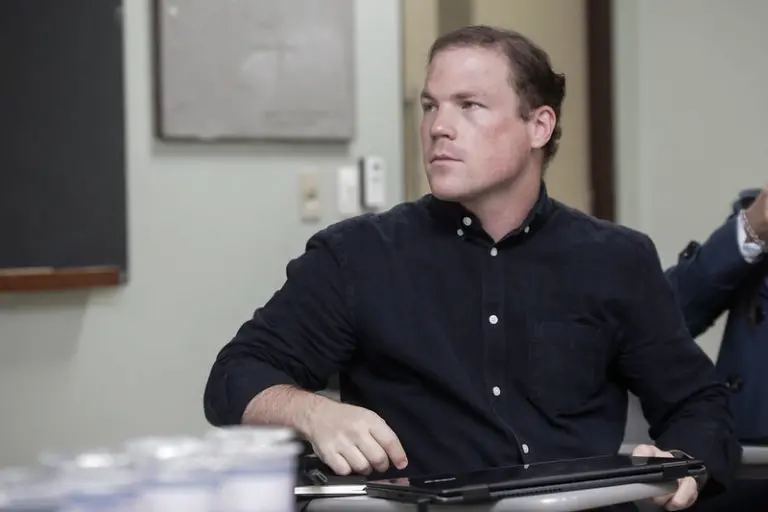
For this new edition of the Q&A series at Report for the World, Miguel Garcia welcomes a very special guest: Joseph Poliszuk, a Venezuelan journalist and winner of the 2025 Gabo Award for Excellence. A seasoned investigative reporter with a long career in journalism, Poliszuk coordinated the Venezuelan chapter of the Panama Papers investigation and has spent years rigorously tracking corruption in Venezuela. He is the co-founder and editor of Armando.info, an investigative media outlet that operates from exile and is supported by Report for the World. Joseph, welcome, and thank you for joining us for this conversation.
Joseph Poliszuk: thank you for having me
Report For The World: Given the growing pressure that had been mounting for months against the Maduro regime, what was your first reaction when you learned that the operation that led to the capture of Nicolás Maduro was underway? Was it what you expected?
Joseph Poliszuk: Well, it’s a sign of the times that despite all the misinformation in Venezuela, we immediately got involved. Even though most of the team at Armando.info is in exile, we found out immediately what was happening. And, as an anecdote, we couldn’t sleep. We were watching to see what would happen so that we could cover it all later. We don’t cover breaking news, but of course reality calls us.
RFW: What do you say to those who believe that regardless of the outcome, this was an attack on Venezuelan sovereignty and a breach of international law?
JP: The fact is that there has been a breakdown of constitutional order and human rights in Venezuela for a long time. Of course, we cannot hide the fact that this is a violation of sovereignty among many others.
In this case, it is territorial sovereignty, but Nicolás Maduro’s government had already violated popular sovereignty and, long before that, human rights in Venezuela. There is a revolving door of political prisoners at the moment. Right now, there are more than 800 political prisoners, but we do see that revolving door throughout Maduro’s regime, with almost 20,000 political prisoners.
Many irregularities are taking place, and so we are now seeing the corollary of Maduro’s regime with Maduro. We will see what happens next.
RFW: Of course, and also the presence and influence of Cuba, Iran, Russia, and China, which also account for possible violations of Venezuelan sovereignty.
JP: I am not a political leader or a civil society actor; we are journalists, in my case an investigative journalist, and we see reality, but in Venezuela there is a whole debate because there are those who now warn that there will be a US invasion, but the fact is that the country has long been invaded by Cuban guards, Colombian guerrillas, and the geopolitical interests of Russia, China, and Iran.
RFW: Why do you think Venezuela has only published the names of the 32 Cuban troops who died in the attack to remove Maduro and very little has been said about the Venezuelans who died in the incursion, nor are there many images or coverage of the destroyed facilities?
JP: I think that is a symptom of Venezuela these days.
For many years, we have not had official figures on COVID, inflation, or homicides. Let’s also remember that during Chávez’s time, Caracas became the most well-maintained city in the entire hemisphere. But it is also a symptom that some things are changing.
For more than 20 years, 26 to be exact, we have used anti-imperialist language, and it strikes me that Chavismo always called for closing ranks against any invasion and specifically against the hegemonic leader, at least of the hemisphere, if not the world, the United States.
And it strikes me that they are no longer denouncing this, there are different signs, there has been talk of less than 20, even more than 100 victims, but we have no information on that, and that shows how Chavismo, Madurismo, has betrayed itself or broken ranks among themselves, because otherwise I would not understand how they are turning the page so quickly and not warning about not only losses in infrastructure, but also fatalities.
RFW: In addition to the indictment against Maduro in the New York court for narco-terrorism crimes, what is expected to happen with the charges against Maduro in the International Criminal Court? Will Maduro answer for human rights crimes against the Venezuelan people?
JP: I believe that these events show that international law is not working.
You asked me at the beginning about a violation of territorial sovereignty, but the fact is that all the mechanisms in the world, starting with the International Criminal Court, are not working, and human rights cannot come after the rights of a dictator or a president.
RFW: In the same vein, we are now seeing the gradual release of political prisoners and people arbitrarily detained at the Helicoide, these victims of human rights violations in the Helicoide and other prisons. Will there be justice for them?
JP: I think there are two ways of looking at this.
First, at a general and international level, both in the discourse of those who are now running the country on behalf of Maduro, but also in the United States, which is taking a stance that we see more in terms of oil than the release of political prisoners or even elections.
But on the other hand, Jorge Rodríguez himself, not only the brother of the current acting president, but also the president of the National Assembly, announced the release of political prisoners, and just over 20 political prisoners, out of more than 800, have been released.
This warns us that the differences within Chavismo are greater than we may be realizing and that those who hold the keys to these prisons are not the judges through release orders. And that is somewhat what we have reported on Armando.info, a corporation within Chavismo of different power groups that not only divide up oil revenues and state businesses, but even the country’s prisons.
RFW: Armando.info has been monitoring the regime for years. Now that the United States says it will be in charge of the country for a while, there is no clear plan, but it is the same Chavismo-Madurismo structure that is running the country. What does that tell you?
JP: Yes, there are many expectations, but I prefer to be cautious. The truth is that we have been hit by a kind of political earthquake, and we will have to see where this goes. We do not cover breaking news; we have dedicated ourselves to investigative journalism and to pulling the strings of power to see what deals have been made. So, I prefer to be cautious and see where this goes.
But what I would like to say, as a Venezuelan, is that I hope for elections that will allow us to move toward a democratic transition.
RFW: With the latest news, we have seen people leaving Venezuela and many others returning to find the same corruption, paying tolls—foreign and local journalists have reported direct threats and systematic obstruction of the work of the press. How much has the situation in Venezuela changed just days after Maduro Moros was removed from power?
JP: Well, we know that no transition happens overnight, and a country that has become so corrupt is not going to regenerate overnight either. But there must be constitutional guarantees amid this chaos and uncertainty so that we can return and rebuild the country.
RFW: A few months ago, prior to the international investigative journalism conference in Malaysia, you said in an interview that journalism in exile has been idealized, that it has certain advantages and enormous challenges. So I want to ask you, what is it like to be a journalist in exile, what are the challenges, and what is the cost of continuing to do the work of Armando.Info from abroad?
JP: We have found some ways to continue covering what is happening inside from outside, and it has worked for us because there is void, a lack of information and because it is the only way to protect our safety and continue doing our work, but it is not ideal.
That said, I think I would summarize it in three methodologies that have worked for us. First of all, traditional journalism. Although many of us are not there, some of us are, we are a hybrid newsroom.
We are not in the field, and you lose observation, you lose timing, but we also have sources, and we call on those sources and contact them both inside and outside the country.
Then we use technology, from data journalism to artificial intelligence. For example, in one very successful case, we geolocated with an algorithm; we programmed an algorithm to geolocate, or rather, the illegal mines and clandestine airstrips in the south of the country.
And finally, the awareness that we live in a global world and the creation of a global community so that, with the help of colleagues, we can search for information all over the world. In a globalized world, a ship that leaves a port and arrives in Venezuela or leaves Venezuela and arrives at another port, the information goes both ways.
In that sense, we search databases and also generate that community that I told you about, which has been part of major leaks worldwide.
RFW: With Maduro’s departure from power, circumstances in Venezuela are changing, new scenarios are emerging, and Delcy Rodríguez has already taken power, but there is uncertainty about what the near and long-term future holds for Venezuela. How is Armando.info’s editorial approach changing or adapting to this situation?
JP: Well, I think there are several answers to that.
First of all, as soon as we can return, we will, of course, return to cover what is happening from the inside. It was an accident that we had to leave, and we hope to return soon. Our editorial line will not change in the sense that we do research and will continue to report on Venezuela from whatever perspective comes our way. Hopefully, it will be from a more democratic country again.
But of course, we have to follow the day-to-day events, and things are changing. These have been frantic days, and we will continue to investigate what is happening. In general, Venezuela has become a kleptocracy, and one of our main lines of inquiry has been to follow those businesses. Whoever comes to power, that will remain on our agenda, like many other things that may begin. We’ll see.