
Transforming a hidden local land dispute into a statewide political storm!
India – The Mooknayak: The Mooknayak’s investigation causes a stir in the corridors of power; Anandpur Dham case echoes in the Legislative Assembly
The Mooknayak is an independent digital media platform based in India that focuses on stories from marginalised communities, including Dalits, Tribals, women and other underrepresented groups. Through ground reporting and impact journalism, The Mooknayak brings forward voices and issues that are often ignored by mainstream media.
- India
- The Mooknayak
- 2026
- India
- The Mooknayak
- 2026
MAIN REVENUE MODEL
> The Story
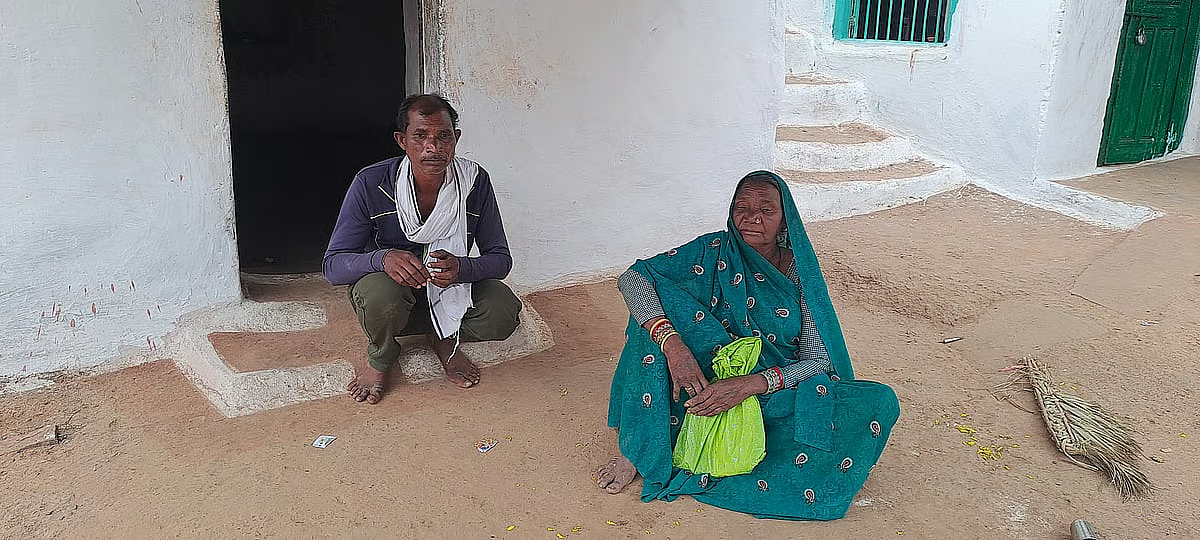
In Madhya Pradesh’s Ashoknagar district near Isagarh, the Anandpur Dham Trust faced serious accusations of systematically grabbing ancestral lands belonging to Sahariya Adivasi (Tribal) families. Journalist Ankit Pachauri from The Mooknayak began with on-ground reporting in villages like Jamdehara, where he documented stories of threats, physical assaults, hut burnings and forced evictions.
The pattern was clear: locals were first lured with jobs at the ashram, then pressured through fake documents to surrender land. Follow-up investigations exposed even graver issues: exclusive videos and audios of alleged sexual abuse inside the ashram, where young men and women claimed they were forced into exploitation. Later reports revealed seven mysterious underground basements built without official records or permissions.
Impact Summary:
The Mooknayak’s fearless investigative series transformed a hidden local land dispute into a statewide political storm. It not only exposed deep-rooted exploitation of Adivasi communities but also shattered the administration’s silence, triggering swift government response and mainstream media coverage.
Despite initial administrative silence, the relentless coverage forced action: the district collector was transferred within 48 hours, and the issue exploded in the state assembly where the revenue minister admitted the Trust controls over 5,200 acres, including 10 acres of government and forest land.
The collector’s emergency transfer, open admission of encroachments in the assembly, and demands for high-level probes showed how one platform’s persistent journalism could hold power accountable. What started as ground reports in remote villages quickly became a major public issue, amplifying marginalised voices and forcing both political parties and larger media houses to take notice.
External Network Impact
Congress leaders, especially SC wing chief Pradeep Ahirwar, publicly cited The Mooknayak’s videos and reports in press conferences and sent formal complaints to the Chief Minister and PMO demanding a probe. Opposition MLAs raised the matter in the assembly, turning it into a political weapon. Mainstream outlets like Dainik Bhaskar and other major channels began their own follow-ups and ground visits, pushing the story from local to national attention. This network effect created a domino impact where one independent investigation compelled larger media and political ecosystems to engage seriously.
Individual/Community Impact
For Sahariya Adivasi (Tribal) families like Bhumariya Bai and Laluram Sahariya, the coverage finally gave them a platform to speak about years of fear, violence and land loss. Victims of alleged sexual abuse inside the ashram felt slightly safer sharing their trauma through recorded evidence. Daily threats and insecurity have not vanished, but the public spotlight reduced their isolation and gave them hope that their voices are now being heard at the highest levels. The community, long ignored, suddenly found its struggle recognised as a larger human rights and land rights issue.
External Institutional Impact
The reports directly pressured institutions into action. Despite the model code of conduct, the Ashoknagar collector was removed within 48 hours after high-level permission from the Election Commission. In the assembly, Revenue Minister Karan Singh Verma was forced to give a written reply admitting the Trust’s control over 5,200+ acres and confirming 10 acres of government land encroachment. Police and revenue officials faced sharp questions on their inaction, while demands for an impartial high-level inquiry gained momentum. The case exposed systemic failures in protecting tribal land rights and handling serious sexual abuse complaints that had reached even the PMO.
Ground reports on Anandpur Dham and the follow-up report:

