

Since 2016, Ukraїner has reshaped how Ukrainians — and the world — see the country. Through expeditions to remote villages, intimate portraits of everyday Ukrainians, and long-form documentary work, the nonprofit media organization has become a leading source of context-rich, narrative-driven reporting from Ukraine.
In this conversation for the 75th International Press Institute (IPI) congress and Media Innovation Festival in Vienna, Preethi Nallu speaks with Anastasiia Marushevska, Editor-in-Chief and Co-Founder of Ukraїner International, about the origins of the project, how it has evolved during the full-scale invasion, and how Ukraїner sustains its work through community support, brand partnerships, and adaptive storytelling for global audiences.
This conversation has been edited for clarity.
You can watch the full video of the Q&A here.
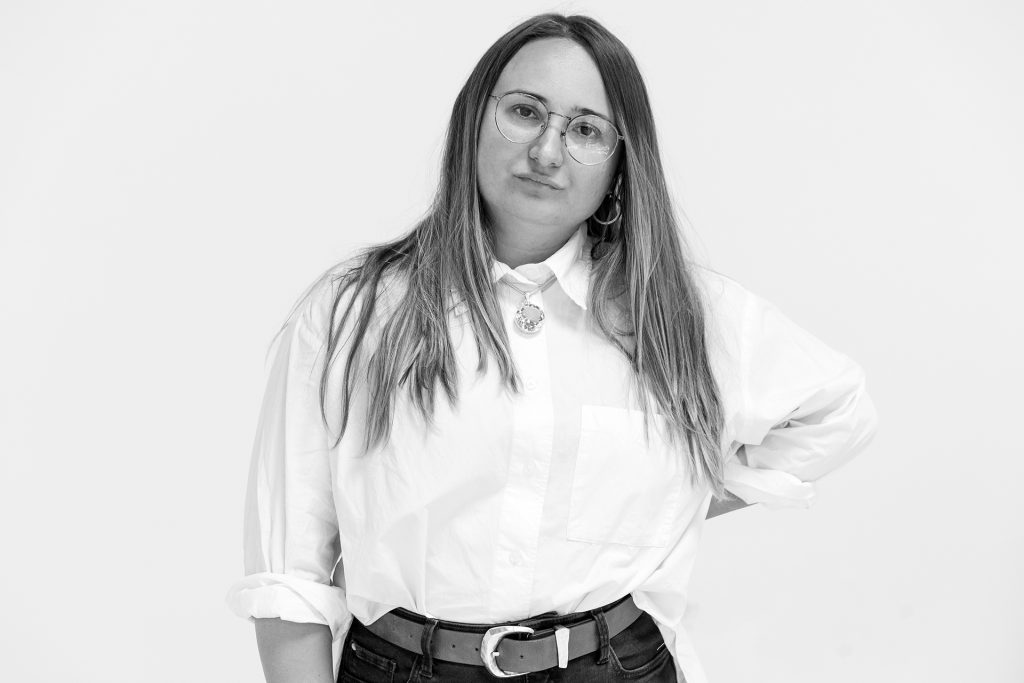
Q&A WITH ANASTASIIA MARUSHEVSKA
Preethi: You founded Ukraїner in 2016 during a very different period in Ukraine. How did it all begin?
Anastasiia: Ukraїner started just after the Maidan era, when Ukrainians were searching for ways to reclaim identity and reconnect with history. There was a new cultural confidence — that it was cool to speak Ukrainian, to know your roots, to understand where you come from.
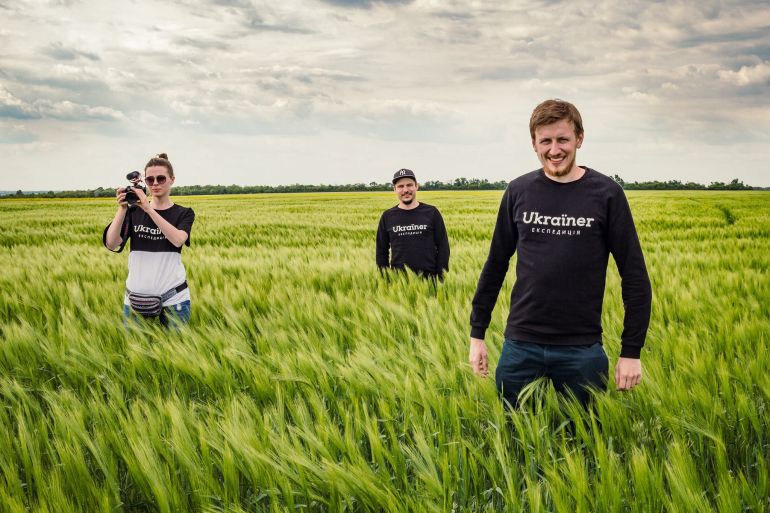
The project began with expeditions: a small team of volunteers, a borrowed car, some donated equipment, and the determination to see the country in its entirety. They traveled to the smallest villages, remote hamlets, and big cities, spending time with people and documenting their lives. What started as simple vlogs soon grew into full documentaries, books, and a long-term editorial mission rooted in listening and context, not commentary.
Preethi: Those expeditions seem to have shaped not only your storytelling but how Ukrainians understand their own country. What made them so influential?
Anastasiia: We made a conscious decision to map Ukraine through its historical regions — not the Soviet-imposed administrative ones. Dialects, customs, and cultural identities formed along those older borders, and presenting Ukraine through that lens changed how many people saw it.
The expeditions revealed something essential: Ukrainians’ deep resourcefulness and tradition of self-organizing. We would meet a villager who single-handedly built a local folklore museum, or an amateur artist creating his own universe of paintings. One famous example is a self-taught painter in his 70s who dreamed of seeing Greece to paint Greek mythology. Our team crowdfunded his first-ever passport and trip abroad, then produced a documentary about his journey. Stories like these built our first supporter community and continue to inspire people today.
Preethi: You’ve recently relaunched the expeditions. How has the full-scale invasion changed your reporting?
Anastasiia: The war made us faster, but we remain committed to context. We still don’t chase news — we listen, observe, and document. But we’ve added new formats.
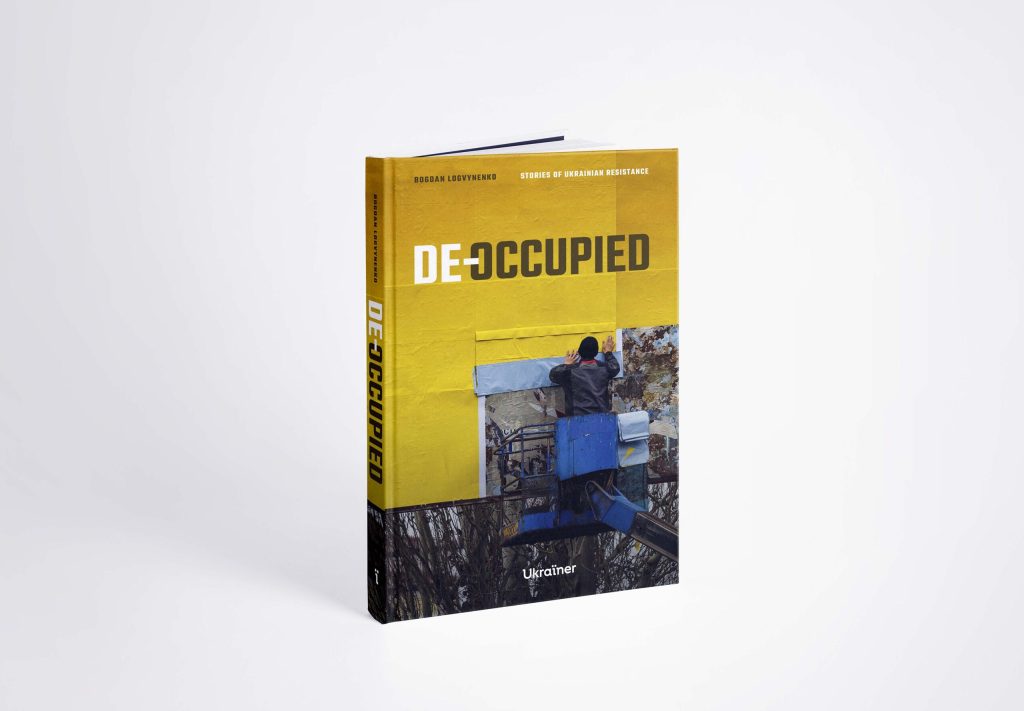
For example, we followed the Ukrainian Armed Forces across liberated territories in 2022–23, producing the De-Occupation series. We interviewed communities who survived occupation, from well-known regions like Kherson to small villages no one had heard of.
Sometimes the stories are tragic; sometimes they are surprisingly human — like the man who hid his chicken in a bathtub to avoid being tracked by Russian troops. These intimate stories carry the emotional truth of the war in a way breaking news cannot.
We also produce long-term reporting on elite Ukrainian military units, not to glorify them but to show the historical lineage of resistance and the motivations driving them today.
Preethi: Ukraїner International speaks to global audiences. How do you think about countering disinformation?
Anastasiia: We focus on narratives, not just debunking. Disinformation is only one tool that shapes narratives. Our responsibility is to tell stories that reveal the real people behind the headlines.
We adapt our content carefully. A full documentary might not translate well for an international audience, so we create targeted short-form pieces for Instagram, TikTok, or YouTube. Each clip is crafted as a standalone story, not just an announcement of a bigger film.
Recently, we produced an English-language documentary on Christianity in Ukraine — partly to counter claims circulating in U.S. political debates that Ukraine “bans Christianity.” To make the film resonate with American audiences, we chose a Republican former congressional staffer as the host. He speaks their language and understands their cultural frame.
We take the same tailored approach for French, German, or other audiences. Each narrative must fit the viewers’ worldview and information needs.
Preethi: Many nonprofit newsrooms rely almost entirely on grants. But Ukraїner has built a more diversified model. How?
Anastasiia: From the beginning, people trusted Ukraїner because we weren’t about hype or sensationalism. That reputation made partnerships possible — but on our terms.
We work with brands mostly through in-kind support: Mazda and Toyota have provided cars; Naftogaz has provided fuel; hotels have hosted our teams. Our office and van space in Kyiv are also donated. Most early contributors were volunteers.
Now our team is larger, but we still use volunteers for foreign-language versions, especially diaspora communities abroad.
When USAID funding was cut, our audience responded immediately: in a few days we raised over $30,000 — enough to stabilize operations while we adapted. That showed us the strength of our community.
We also collaborate with Ukrainian brands on merchandise, like embroidered shirts and patches. For each expedition, we invite local or international brands to support the journey without influencing the editorial direction.
Our advisory board of entrepreneurs donates a fixed monthly amount to support operations. They can advise on strategy but have no influence on editorial work. This keeps us independent while creating a sustainable base.
Preethi: It sounds like a model built on trust — and on relationships rather than transactions.
Anistasiia: Exactly. We don’t “package” our content around partners. We invite people to support a mission they believe in. And because that mission is rooted in authenticity — in listening, in slow storytelling, in showing Ukraine through its own voices — people feel part of something bigger than a single story or project.
- Visit Ukraїner
- Anastasiia on LinkedIn
- Back to News and Insights